

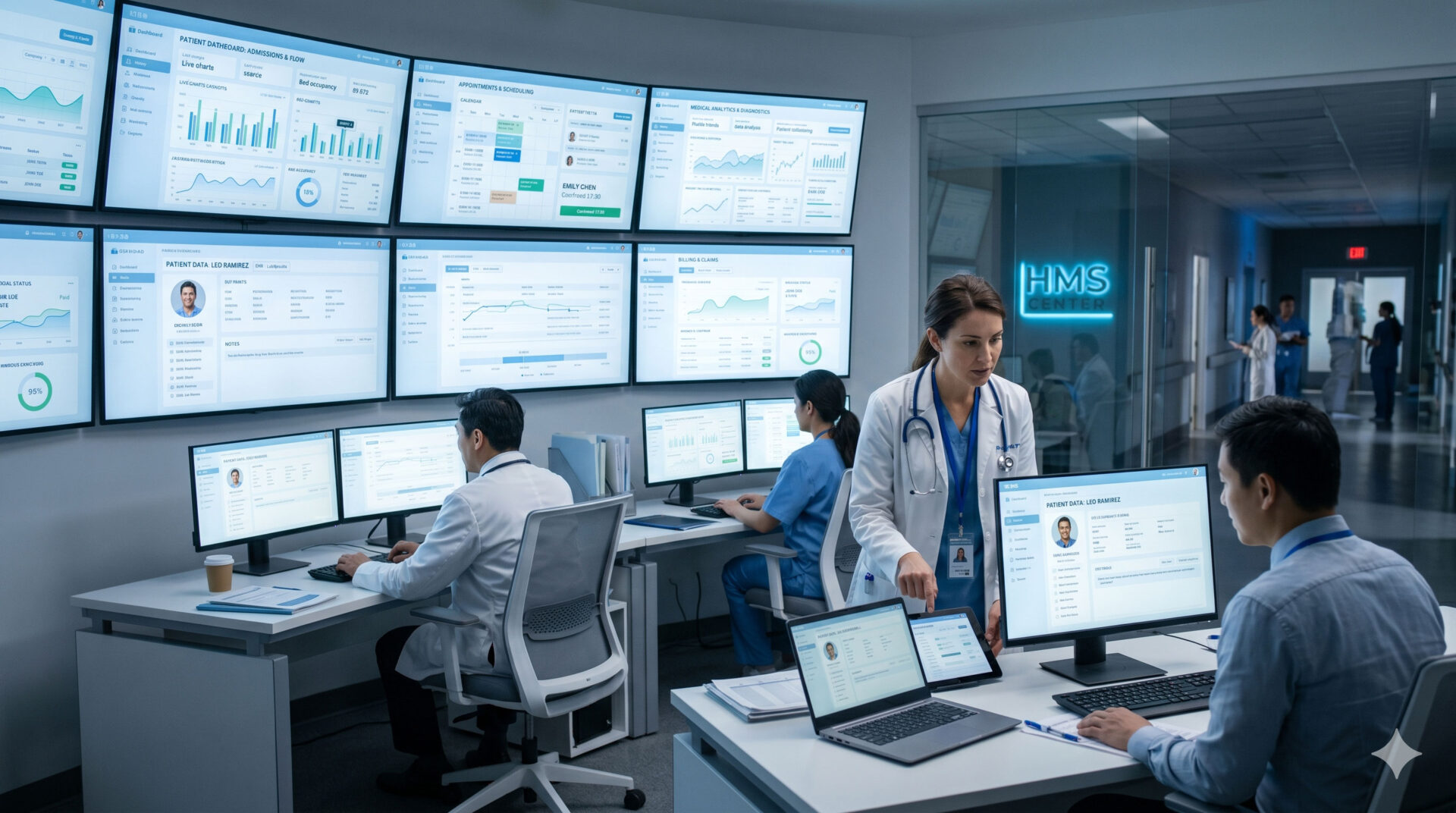
The Future of Healthcare: Implementing a Robust Hospital Management System
In the rapidly evolving landscape of modern medicine, efficiency is no longer a luxury—it is a necessity. Hospital Management System (HMS) technology has emerged as the backbone of contemporary clinical operations, seamlessly integrating various departments into a unified digital ecosystem. Since patient care depends on timely data, these systems are designed to automate everything from initial registration to final billing.
Furthermore, the transition from manual record-keeping to a digital framework significantly reduces the margin for human error. Consequently, doctors and nursing staff can devote more time to patient interaction rather than drowning in paperwork. In addition to improving internal workflows, an HMS enhances the patient experience by providing easy access to medical histories and scheduling. Moreover, the implementation of such software ensures that data remains secure and compliant with global healthcare regulations. Ultimately, adopting a comprehensive Hospital Management System is the most effective way to optimize resource allocation while maintaining the highest standards of clinical excellence.
The Core Architecture of a Hospital Management System
To understand how a Hospital Management System transforms a medical facility, one must first look at its structural design. Initially, these systems were simple databases used for storing names and addresses. However, today they act as a sophisticated “digital brain” for the entire hospital. Specifically, the architecture is usually divided into modules such as outpatient management, inpatient services, pharmacy, and laboratory integration. Because these modules communicate in real-time, information flows instantly from the triage desk to the specialist’s tablet. Furthermore, this interconnectedness ensures that no data is siloed, which is crucial for making split-second clinical decisions.
Streamlining Patient Registration and Scheduling
In the first place, the patient journey begins at the registration desk, where a Hospital Management System simplifies the intake process. Instead of filling out endless paper forms, patients can often pre-register online. Consequently, this reduces waiting room congestion and improves the overall patient experience. Moreover, the scheduling module uses intelligent algorithms to manage doctor availability. If a surgeon is delayed in the operating room, the system can automatically notify waiting patients or suggest rescheduling options. By doing so, the hospital maintains a high level of professionalism and respects the patient’s time.
Enhancing Clinical Documentation and EHR Integration
Moving forward, the most vital component of any modern medical facility is the Electronic Health Record (EHR). Within a Hospital Management System, the EHR provides a longitudinal view of a patient’s health history. Not only does it track current medications, but it also flags potential allergic reactions or drug interactions. As a result, the safety of the patient is significantly increased. Additionally, clinicians can use standardized templates to document visits quickly. Since these notes are legible and standardized, the risk of misinterpretation—which is common with handwritten notes—is virtually eliminated.
Pharmacy and Inventory Management Efficiency
In addition to patient care, a Hospital Management System plays a pivotal role in logistics. Managing a hospital pharmacy requires meticulous attention to detail regarding stock levels and expiration dates. To illustrate, the system can trigger automatic alerts when essential life-saving drugs fall below a certain threshold. Likewise, it tracks the dispensing of controlled substances, ensuring full regulatory compliance. By automated tracking, the hospital avoids the financial loss associated with expired medications and prevents “stock-outs” during emergencies. Thus, the pharmacy becomes a high-efficiency hub rather than a bottleneck.
Laboratory and Diagnostic Integration
Furthermore, the integration of laboratory information systems (LIS) within the Hospital Management System accelerates the diagnostic cycle. Once a lab technician completes a blood test or an imaging study, the results are immediately uploaded to the patient’s central file. Immediately, the attending physician receives a notification on their device. Because there is no need for physical runners to carry paper results across the building, treatment can begin hours earlier than in traditional setups. In turn, this speed can be the deciding factor in critical care scenarios where every minute counts.
Financial Management and Transparent Billing
Another key aspect involves the complex world of healthcare finance. Billing in a medical setting is notoriously difficult due to insurance claims and varying service codes. Fortunately, a Hospital Management System automates the generation of invoices by pulling data directly from the services rendered. For instance, if a patient undergoes a scan and receives medication, these items are automatically added to their digital bill. Consequently, the margin for billing errors is minimized, and the insurance claim process becomes significantly faster. Overall, this leads to a healthier cash flow for the institution.
Data Security and Regulatory Compliance
Given that medical data is highly sensitive, security is a paramount concern for any Hospital Management System. Therefore, developers implement multi-layered encryption and strict access controls. Only authorized personnel with specific credentials can view private health information. In light of regulations like HIPAA or GDPR, these systems provide detailed audit trails that show exactly who accessed what data and when. By maintaining such high security standards, hospitals protect themselves from legal liabilities and, more importantly, protect the privacy of their patients.
Telemedicine and Remote Patient Monitoring
In recent years, the scope of the Hospital Management System has expanded to include virtual care. Specifically, telemedicine modules allow doctors to conduct consultations via video link directly through the platform. Moreover, integration with wearable devices allows for remote patient monitoring. If a patient’s heart rate or glucose levels reach a dangerous level at home, the system alerts the hospital staff immediately. This means that the hospital’s reach extends far beyond its physical walls, providing a continuous “safety net” for chronic disease management.
Improving Staff Productivity and Resource Allocation
Regarding internal management, the system provides invaluable tools for human resources and ward management. For example, it can analyze patient inflow patterns to suggest optimal staffing levels for the ER. In addition, it tracks the performance and attendance of the medical staff. By using data-driven insights, hospital administrators can identify areas where staff might be overworked or underutilized. Consequently, the hospital operates at peak efficiency, reducing burnout and ensuring that the right personnel are always in the right place.
The Role of Analytics in Strategic Planning
Finally, a Hospital Management System serves as a powerful engine for business intelligence. By analyzing thousands of data points, administrators can see which departments are the most profitable and which require more investment. Similarly, they can track clinical outcomes to ensure the hospital is meeting its quality benchmarks. Since these decisions are based on hard data rather than intuition, the long-term strategic planning of the hospital becomes much more reliable. As a result, the facility can continue to grow and adapt to the changing needs of the community.
Enhancing the Patient Portal Experience
Beyond the clinical walls, the patient portal is a cornerstone of modern engagement. Through this interface, patients can view their lab results, download immunization records, and message their care team. Instead of calling the hospital for every minor inquiry, the patient finds the answers they need at their fingertips. This empowerment not only satisfies the patient but also significantly reduces the administrative burden on the hospital’s front-desk staff. Indeed, a well-implemented portal fosters a sense of partnership between the patient and the healthcare provider.
Surgical Suite and Operating Room Coordination
Furthermore, the coordination of operating rooms (OR) is one of the most complex tasks in healthcare. A Hospital Management System manages the scheduling of the room, the surgical team, and the necessary specialized equipment. If a specific instrument needs sterilization, the system tracks its status through the Central Sterile Services Department (CSSD). By synchronizing these moving parts, the hospital avoids costly delays and ensures that the surgical schedule runs like clockwork. Consequently, more procedures can be performed safely within the same timeframe.
Specialized Nursing Care and Ward Management
In terms of daily ward operations, the system provides nurses with digital “worklists” that prioritize tasks based on urgency. For example, it reminds staff when a patient is due for medication or when a wound dressing needs changing. Because the system is accessible via mobile carts or handheld devices, nurses can update records at the bedside. This real-time documentation ensures that the “handover” between shifts is seamless and error-free. Ultimately, the quality of bedside care is elevated because the staff is better informed and more organized.
Dietary and Nutrition Services Integration
Moreover, even non-clinical departments like the kitchen benefit from a Hospital Management System. When a doctor prescribes a specific diet—such as low-sodium or diabetic-friendly—the information is sent directly to the nutrition department. As a result, there is no risk of a patient receiving a meal that could interfere with their treatment or recovery. By automating these dietary requirements, the hospital ensures a holistic approach to patient wellness. Similarly, the system can track food inventory and waste, contributing to the hospital’s overall sustainability and cost-management goals.
Radiology and PACS Connectivity
Additionally, the integration with Picture Archiving and Communication Systems (PACS) allows for high-resolution images to be stored and viewed within the Hospital Management System. Whether it is an X-ray, MRI, or CT scan, the physician can pull up the image instantly on any authorized screen. Because these images are stored digitally, there is no need for physical film, which saves money and storage space. In addition to the cost savings, the ability to zoom, rotate, and manipulate digital images allows for a much more detailed and accurate diagnosis.
Blood Bank and Emergency Preparedness
In the event of a major emergency, the hospital must have an accurate count of its blood supply. The Hospital Management System monitors the blood bank’s inventory, categorized by type and expiration date. If a mass casualty event occurs, the system can quickly identify which blood types are in short supply and facilitate urgent procurement. Furthermore, during such crises, the system helps in triaging large volumes of patients efficiently. By having a centralized command center via the software, the hospital leadership can manage the crisis with a clear overview of available beds and resources.
Maintenance and Asset Tracking
Finally, a hospital is full of expensive medical equipment that requires regular maintenance. The Hospital Management System includes an asset management module that tracks the location and service history of ventilators, infusion pumps, and monitors. By scheduling preventative maintenance, the system ensures that critical equipment does not fail when it is needed most. Moreover, the use of RFID tags integrated with the software allows staff to find the nearest available wheelchair or portable X-ray machine in seconds. This level of organization prevents loss and ensures that the hospital’s physical assets are utilized to their maximum potential.
Frequently Asked Questions (FAQs)
What is a Hospital Management System? It is a comprehensive software solution designed to manage all aspects of hospital operations, including patient registration, medical billing, appointment scheduling, and inventory tracking.
How does an HMS improve patient care? By digitizing medical records, an HMS ensures doctors have instant access to patient history, reducing errors and allowing for faster, more accurate diagnoses.
Is my hospital data secure? Yes, our Hospital Management System uses advanced encryption and role-based access controls to ensure all sensitive patient and financial data remains confidential.
Can it handle billing and insurance claims? Absolutely. The system automates the entire billing process, integrates with insurance providers for faster claims, and reduces manual paperwork.
Is the system scalable for smaller clinics? Yes, our solution is designed to grow with you. Whether you run a small private clinic or a multi-specialty hospital, the system is fully customizable.
Conclusion
In an era where efficiency and accuracy are non-negotiable in healthcare, a Hospital Management System is no longer a luxury—it is a necessity. As a leading service provider, we offer a robust, user-friendly platform that eliminates administrative bottlenecks and puts the focus back on patient recovery. By integrating your clinical and financial workflows, we help you deliver world-class medical services while optimizing your bottom line.
Ready to transform your healthcare facility? Let the best in the industry lead the way.
If you want to get Our Services, visit our Contact Us page or message us directly on WhatsApp.
Because we believe in continuous growth, we have curated a selection of posts to help you master the digital world. Furthermore, visiting our Blog Page regularly will keep you updated on the latest industry shifts.


