AI Powered Marketing Services | Smart Growth & Automation

  • Home
  • AI
  • AI Powered Marketing Services | Smart Growth & Automation
AI Powered Marketing Services | Smart Growth & Automation

AI Powered Marketing Services | Smart Growth & Automation

test

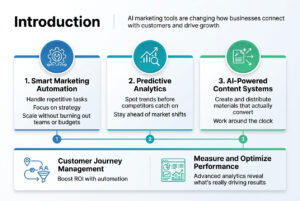
AI marketing tools are changing how businesses connect with customers and drive growth. This guide is for marketing teams, business owners, and entrepreneurs who want to scale their efforts without burning out their teams or budgets.

Smart marketing automation can handle repetitive tasks while you focus on strategy. Predictive analytics help you spot trends before competitors catch on. AI-powered content systems create and distribute materials that actually convert.

We’ll cover how to automate your customer journey management to boost ROI, use predictive analytics to stay ahead of market shifts, and implement smart content creation systems that work around the clock. You’ll also learn to measure and optimize performance using advanced analytics that reveal what’s really driving results.


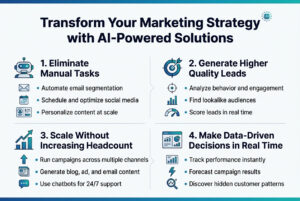
Transform Your Marketing Strategy with AI-Powered Solutions
test

Eliminate Manual Tasks That Drain Your Resources

Your marketing team spends countless hours on repetitive tasks that could be handled automatically. AI transforms these time-consuming processes into streamlined operations that run themselves. Email campaigns that once required manual segmentation now intelligently sort contacts based on behavior patterns and engagement history. Social media posts get scheduled and optimized without human intervention, while lead scoring happens continuously in the background.

The most powerful change comes from automated content personalization. Instead of creating dozens of versions for different audience segments, AI analyzes customer data and generates personalized messages for each individual. This level of customization was impossible with manual processes, yet AI handles it effortlessly across thousands of prospects simultaneously.

Marketing automation powered by AI also eliminates the guesswork from campaign timing. The system learns when each contact is most likely to engage and delivers messages at optimal moments. Your team shifts from managing tedious tasks to focusing on strategy and creative development.

Generate Higher Quality Leads with Intelligent Targeting

Traditional targeting methods rely on basic demographics and guesswork. AI takes lead generation to an entirely different level by analyzing behavioral patterns, purchase history, and engagement signals to identify prospects who are genuinely ready to buy. The system recognizes subtle indicators that humans miss, like specific page visit sequences or content consumption patterns that signal buying intent.

Machine learning algorithms continuously improve targeting accuracy by studying which leads convert and why. They identify lookalike audiences among your existing customer base and find similar prospects across various channels. This means your marketing budget goes toward reaching people who are statistically more likely to become customers.

AI also scores leads in real-time based on their likelihood to convert. Sales teams receive warm prospects instead of cold calls, dramatically improving conversion rates. The system tracks every interaction and updates lead scores automatically, ensuring your team always focuses on the hottest opportunities.

Scale Your Marketing Efforts Without Increasing Headcount

Growth often means hiring more people to handle increased marketing demands. AI breaks this expensive cycle by amplifying your existing team’s capabilities. One marketer can now manage campaigns that previously required an entire department. The system handles multiple channels simultaneously while maintaining consistency across all touchpoints.

Content creation scales dramatically with AI assistance. Blog posts, social media updates, ad copy, and email campaigns generate automatically based on your brand guidelines and performance data. The system creates variations for A/B testing and adapts messaging for different audience segments without human intervention.

Customer support also benefits from this scalability. AI chatbots handle routine inquiries 24/7, qualifying leads and nurturing prospects even when your team is offline. Complex questions get routed to human agents with complete conversation context, making every interaction more efficient.

Make Data-Driven Decisions in Real-Time

Marketing decisions based on gut feelings or outdated reports become obsolete with AI analytics. Real-time data processing reveals campaign performance as it happens, allowing for immediate adjustments. You can see which messaging resonates with specific audience segments and shift budget allocation accordingly within minutes.

Predictive analytics show you what’s likely to happen next based on current trends and historical patterns. Campaign performance forecasting helps you allocate resources more effectively and avoid costly mistakes before they impact your bottom line. The system identifies opportunities and threats automatically, sending alerts when action is needed.

AI also uncovers hidden patterns in customer behavior that traditional analytics miss. These insights reveal new market opportunities, optimal pricing strategies, and content topics that drive engagement. Your marketing strategy becomes proactive rather than reactive, giving you a significant competitive advantage in rapidly changing markets.

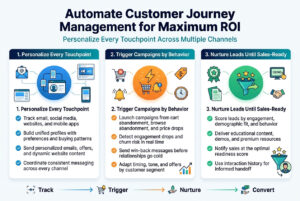
Automate Customer Journey Management for Maximum ROI
test

Personalize Every Touchpoint Across Multiple Channels

Modern customers expect brands to know them personally, and AI delivers that experience at scale. Smart automation systems track customer interactions across email, social media, websites, and mobile apps, creating unified profiles that reveal preferences, buying patterns, and communication habits.

AI algorithms analyze this data to customize messaging for each individual. When someone browses product pages but doesn’t purchase, the system automatically sends targeted emails featuring those exact items with personalized discount codes. Social media ads show relevant products based on past purchases, while website content dynamically adjusts to match visitor interests.

The beauty lies in seamless coordination across channels. A customer might see a Facebook ad, visit your website, and receive a follow-up email – all featuring consistent, personalized messaging that feels natural rather than robotic. AI ensures each touchpoint builds on previous interactions, creating conversations rather than random marketing interruptions.

Advanced segmentation goes beyond basic demographics, using behavioral data to create micro-audiences. Someone who frequently shops during lunch breaks receives different messaging than weekend browsers. Night owls get emails at optimal times when they’re most likely to engage.

Trigger Campaigns Based on Customer Behavior Patterns

AI monitoring never sleeps, constantly watching for behavioral signals that indicate purchase intent, satisfaction levels, or churn risk. When specific actions trigger predetermined thresholds, automated campaigns launch instantly.

Shopping cart abandonment triggers immediate recovery sequences, starting with gentle reminders and escalating to time-sensitive offers. Price drop alerts reach customers who viewed expensive items, while browse abandonment campaigns reconnect with window shoppers using compelling content about products they considered.

Behavioral triggers extend beyond purchasing patterns. AI detects engagement drops, identifying customers who haven’t opened emails or visited websites recently. Automated win-back campaigns deploy specialized content designed to reignite interest before relationships go cold.

The system learns from every interaction, refining trigger sensitivity and campaign timing. What works for tech-savvy millennials differs from effective approaches for traditional buyers. AI adapts messaging tone, offer types, and communication frequency based on what drives results for specific customer segments.

Nurture Leads Automatically Until They’re Sales-Ready

Lead nurturing transforms from manual guesswork into precise science with AI-driven automation. The system scores leads based on engagement levels, demographic fit, and behavioral indicators, automatically adjusting nurture intensity and content selection.

High-potential leads receive accelerated nurturing with premium content, product demos, and direct sales outreach. Medium-scored prospects get educational content designed to build trust and demonstrate value. Low-engagement leads enter longer nurture sequences focused on brand awareness and relationship building.

AI identifies the optimal moment for sales handoff by analyzing engagement patterns, content consumption, and interaction frequency. When leads reach predetermined readiness scores, sales teams receive notifications with complete interaction histories, enabling informed, relevant conversations.

Nurture campaigns adapt in real-time based on lead responses. Someone who downloads multiple technical whitepapers receives more detailed product information, while prospects engaging with case studies get success stories from similar companies. This dynamic approach ensures every touchpoint moves leads closer to purchase decisions while maintaining authentic relationships.

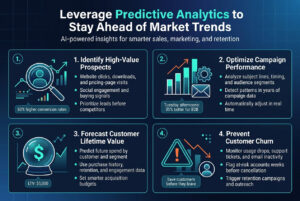
Leverage Predictive Analytics to Stay Ahead of Market Trends

test

Identify High-Value Prospects Before Your Competitors

Smart businesses know that timing is everything in sales. AI predictive analytics gives you a crystal ball into prospect behavior, helping you spot potential customers when they’re just beginning to show buying signals. Machine learning algorithms analyze thousands of data points – from website interactions to social media engagement – to create detailed prospect profiles that reveal who’s most likely to convert.

These systems track patterns across multiple touchpoints, identifying subtle behavioral changes that human analysts might miss. When a prospect downloads specific content, spends time on pricing pages, or engages with product-related posts, AI flags them as high-priority leads before your competition even knows they exist.

The real magic happens when AI combines demographic data with behavioral insights. You’ll discover that prospects from certain industries or company sizes who engage with particular content types have 80% higher conversion rates. This intelligence lets you prioritize outreach efforts and customize messaging for maximum impact.

Optimize Campaign Performance Using Historical Data

Your past campaigns contain treasure troves of information waiting to be unlocked. AI digs through years of marketing data to uncover patterns that drive better results. These systems analyze which subject lines generated the highest open rates, what time of day produced the most conversions, and which audience segments responded best to specific messaging.

Machine learning algorithms process massive datasets to identify correlations humans would never spot.

The optimization process becomes automatic. AI continuously tests variables and adjusts campaigns in real-time based on performance data. If open rates start declining, the system automatically switches to proven subject line formulas. When engagement drops with certain demographics, it shifts budget allocation to higher-performing segments.

Forecast Customer Lifetime Value with Machine Learning

Predicting how much each customer will spend over their entire relationship with your brand transforms how you allocate marketing resources. AI analyzes purchase history, engagement patterns, and behavioral data to calculate precise lifetime value predictions for individual customers and segments.

These forecasts help you make smarter decisions about customer acquisition costs. When you know a particular customer segment has an average lifetime value of $5,000, you can confidently invest more in acquiring similar prospects. Machine learning models factor in purchase frequency, average order values, and retention probabilities to create accurate financial projections.

The insights get granular quickly. AI might reveal that customers acquired through social media channels have 40% higher lifetime values than those from paid search. Or it could show that customers who engage with educational content in their first 30 days stick around 60% longer than average.

Prevent Customer Churn Through Early Warning Systems

Losing customers costs six times more than keeping them. AI churn prediction models monitor customer behavior continuously, flagging accounts at risk of cancellation weeks or months before they actually leave. These systems track engagement metrics, support ticket patterns, and usage trends to identify early warning signs.

The algorithms learn from historical churn data to recognize dangerous patterns. Maybe customers who reduce their product usage by 30% over two months have a 75% chance of churning within 90 days. Or perhaps clients who stop opening emails for three consecutive weeks are likely to cancel soon.

Early detection enables proactive intervention. When AI identifies at-risk customers, automated systems can trigger retention campaigns, special offers, or personal outreach from account managers. This predictive approach often saves customer relationships that would otherwise be lost to reactive damage control.

Implement Smart Content Creation and Distribution Systems

Generate Compelling Copy That Converts at Scale

AI transforms content creation from a time-consuming manual process into a streamlined, data-driven operation that produces high-converting copy at unprecedented speed. Modern AI writing systems analyze millions of successful campaigns to understand what language patterns, emotional triggers, and persuasive elements drive conversions across different industries and audiences.

These systems don’t just generate generic content – they create personalized copy that speaks directly to specific customer segments. By feeding the AI information about your target audience’s pain points, preferences, and buying behaviors, you get copy that resonates on a deeper level. The technology adapts writing style, tone, and messaging based on factors like demographics, purchase history, and engagement patterns.

Optimize Content Timing for Maximum Engagement

Smart timing algorithms analyze historical engagement data, audience behavior patterns, and real-time signals to determine the optimal moments for content publication. These AI systems process vast amounts of data including when your audience is most active on different platforms, their time zones, and even external factors like weather patterns or current events that might affect engagement.

The technology goes beyond basic scheduling by predicting engagement windows specific to different content types. Video content might perform best during evening hours when people have more time to watch, while quick tips and industry news could see higher engagement during lunch breaks or commute times.

AI timing optimization also considers platform-specific algorithms and how they prioritize content in user feeds. The system adjusts posting schedules to maximize organic reach by publishing when platform algorithms are most likely to distribute your content to a wider audience.

Automatically A/B Test Headlines and Creative Elements

AI-powered testing systems continuously experiment with different creative elements to identify what drives the highest engagement and conversion rates. These platforms automatically generate headline variations, test different image combinations, and experiment with calls-to-action without requiring manual intervention.

The testing process happens in real-time, with AI algorithms monitoring performance metrics and automatically adjusting which variations receive more traffic based on early performance indicators. This dynamic approach means your content is constantly being optimized, not just tested once and forgotten.

Advanced testing systems can simultaneously run multiple experiments across different elements of your content. While testing headlines with one audience segment, the same system might be experimenting with different color schemes for buttons or testing various email subject lines with another group.

Distribute Content Across Platforms with Perfect Timing

Multi-platform distribution powered by AI ensures your content reaches the right audience on the right platform at the optimal moment. These systems understand that each social media platform has its own unique audience behavior patterns, content format preferences, and peak engagement times.

The AI adapts your core content for each platform’s specific requirements and audience expectations. A single piece of content might become a detailed LinkedIn article, an Instagram carousel, a Twitter thread, and a Facebook video – all automatically formatted and scheduled for maximum impact on each platform.

Smart distribution systems also monitor cross-platform performance to identify which platforms drive the most valuable traffic for your specific content types. They allocate more resources to high-performing channels while continuing to test and optimize underperforming platforms to unlock their potential.

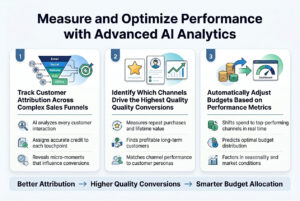
Measure and Optimize Performance with Advanced AI Analytics

test

Track Customer Attribution Across Complex Sales Funnels

Modern marketing journeys involve multiple touchpoints across various channels, making it nearly impossible to manually track which interactions actually drive conversions. AI-powered attribution tracking cuts through this complexity by analyzing every customer interaction and assigning accurate credit to each touchpoint along the sales funnel.

Advanced AI systems process vast amounts of data from email opens, social media clicks, website visits, ad impressions, and offline interactions to create a complete picture of the customer journey. These systems recognize patterns that humans would miss, identifying micro-moments that influence purchase decisions weeks or months later.

The technology goes beyond simple last-click attribution models by weighing the influence of each touchpoint based on timing, customer behavior patterns, and conversion probability. This creates a more accurate representation of what actually drives sales, helping marketing teams understand the true value of their efforts across all channels.

Identify Which Channels Drive the Highest Quality Conversions

Not all conversions are created equal. A customer who makes a single $50 purchase differs significantly from one who becomes a long-term client worth thousands in lifetime value. AI analytics dig deeper than surface-level conversion metrics to identify which channels attract the most valuable customers.

Machine learning algorithms analyze customer behavior post-conversion, tracking metrics like repeat purchase rates, average order values, customer support interactions, and retention periods. This analysis reveals which marketing channels consistently deliver high-quality leads that convert into profitable, long-term relationships.

The insights extend to understanding channel-specific customer personas. AI identifies that social media campaigns might drive younger customers who make frequent small purchases, while email marketing attracts older demographics with higher lifetime values. This granular understanding allows marketers to optimize their channel mix based on business goals rather than vanity metrics.

Automatically Adjust Budgets Based on Performance Metrics

Manual budget allocation often relies on outdated data and gut feelings, leading to missed opportunities and wasted spend. AI-powered budget optimization continuously monitors campaign performance and automatically shifts resources to the highest-performing channels and audiences in real-time.

These systems establish baseline performance metrics for each channel and campaign, then use machine learning to predict optimal budget distributions. When a particular campaign starts outperforming expectations, the AI can instantly redirect funds from underperforming areas to capitalize on the momentum.

The technology also factors in external variables like seasonality, market conditions, and competitor activity when making budget decisions. During high-traffic periods or when competitors increase their spend, AI systems can automatically adjust budgets to maintain visibility and market share without manual intervention.

Smart budget optimization prevents the common scenario where successful campaigns hit spending caps while poor performers continue burning through allocated funds. This dynamic approach ensures marketing dollars always flow toward the strategies delivering the best return on investment.

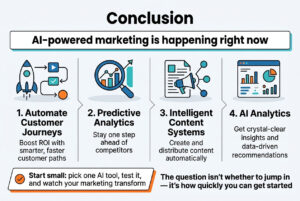
Conclusion

test

AI-powered marketing isn’t just the future – it’s happening right now, and businesses that embrace these tools are already seeing incredible results. From automating customer journeys that boost ROI to using predictive analytics that keep you one step ahead of competitors, smart marketing technology takes the guesswork out of reaching your audience. When you add intelligent content creation and distribution systems to the mix, you’re looking at a complete transformation of how you connect with customers and drive growth.

The real game-changer comes from AI analytics that give you crystal-clear insights into what’s working and what isn’t. Instead of making marketing decisions based on hunches, you get data-driven recommendations that actually move the needle. Ready to stop spinning your wheels with outdated marketing tactics? Start small – pick one AI tool that addresses your biggest pain point, test it out, and watch how it changes your approach to reaching customers. Your competition is already exploring these possibilities, so the question isn’t whether you should jump in, but how quickly you can get started.

If you want to make your ERP system you can contact us or directly call us our details are as follows:

Contact us via contact page :- https://udmcreative.com/contact/

Direct call us :- 03475159209

Location :-  Sector C2 Haris Plaza Mirpur Azad Kashmir

Google Map:-

Leave a Comment

Your email address will not be published. Required fields are marked *