

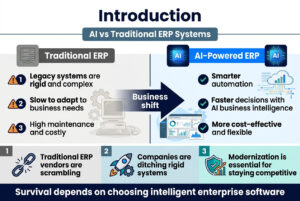
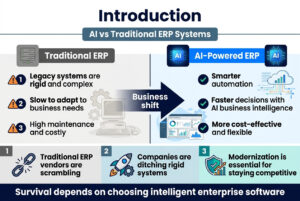
Enterprise software leaders and IT decision-makers are watching AI vs traditional ERP systems reshape the business landscape at breakneck speed. Legacy enterprise resource planning systems that once dominated corporate operations are struggling to keep pace with artificial intelligence enterprise software that delivers smarter, faster, and more cost-effective solutions.
Traditional ERP vendors are scrambling to respond as AI-powered ERP solutions outperform decades-old platforms across every metric that matters. Companies are ditching complex, rigid systems for intelligent business automation that actually understands their needs.
This shift isn’t just about technology—it’s about survival. We’ll explore how traditional ERP system disruption is forcing businesses to choose between staying competitive or clinging to outdated infrastructure. You’ll discover why AI business intelligence capabilities are making legacy systems look like digital dinosaurs, and how enterprise resource planning modernization is no longer optional but essential for staying relevant in today’s market.
Traditional ERP Systems Face Unprecedented Disruption
Legacy Architecture Struggles with Modern Data Volumes
Traditional ERP systems built on decades-old infrastructure simply can’t handle today’s data explosion. These systems were designed when companies processed hundreds of transactions daily, not the millions of data points streaming in every second from IoT devices, social media, and digital touchpoints.
Most legacy platforms rely on relational databases that buckle under the weight of real-time analytics demands. When businesses try to run complex reports or pull insights from multiple data sources simultaneously, these systems crawl to a halt. The rigid data structures that seemed efficient in the 1990s now create bottlenecks that slow decision-making to a dangerous degree.
Cloud-native AI solutions process this same data load effortlessly, using distributed computing and machine learning algorithms that actually get better with more data. While traditional ERP systems require expensive hardware upgrades and database optimization projects just to maintain basic functionality, AI-powered platforms scale automatically.
Rigid Workflows Cannot Adapt to Dynamic Business Needs
Today’s business environment changes faster than traditional ERP systems can adapt. These platforms lock companies into predefined workflows that assume business processes remain static for years. When market conditions shift or new opportunities emerge, organizations find themselves trapped by inflexible software architecture.
Traditional ERP customization requires months of development work, extensive testing, and costly implementation cycles. By the time these modifications go live, business needs have often changed again. Companies end up with expensive workarounds and shadow IT solutions that create data silos and compliance risks.
AI-driven enterprise solutions learn from user behavior and automatically adjust workflows based on changing patterns. They recognize when processes need optimization and suggest improvements in real-time. This adaptive capability means businesses can pivot quickly without waiting for lengthy software development cycles.
High Maintenance Costs Drain Organizational Resources
The financial burden of maintaining traditional ERP systems continues growing each year. These platforms require dedicated teams of specialists, expensive licensing fees, and constant hardware upgrades. Annual maintenance costs typically run 18-25% of the original software investment, creating an ongoing financial drain.
Legacy systems demand specialized knowledge that’s becoming increasingly rare and expensive. Finding developers who understand decades-old programming languages and database structures costs organizations premium wages. Meanwhile, system integration projects stretch budgets thin as companies struggle to connect disparate modules and third-party applications.
Traditional ERP Cost Breakdown:
- Annual maintenance fees: 18-25% of license cost
- Hardware infrastructure: $100K-$500K annually
- Specialized IT staff: $150K+ per developer
- Integration projects: $50K-$200K per connection
AI-powered ERP solutions operate on subscription models with predictable costs and require significantly less specialized maintenance expertise.
User Experience Falls Short of Consumer-Grade Expectations
Modern workers expect software that’s as intuitive as their smartphones, but traditional ERP interfaces feel like digital archaeology. These systems force users through dozens of screens to complete simple tasks, creating frustration and reducing productivity across entire organizations.
The training burden for traditional ERP systems is enormous. New employees need weeks or months to become proficient, and even experienced users struggle with complex navigation paths and cryptic error messages. This poor user experience leads to low adoption rates and workaround behaviors that undermine data integrity.
AI-enhanced interfaces understand natural language queries and provide conversational interactions. Users can ask questions in plain English and receive immediate insights without navigating complex menu structures. Voice commands, predictive text, and smart suggestions make these systems feel modern and responsive rather than bureaucratic and cumbersome.
AI-Powered Solutions Deliver Superior Business Intelligence
Real-time predictive analytics transform decision-making processes
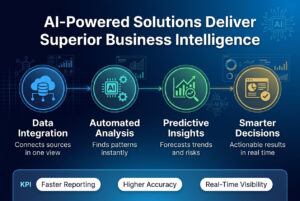
Traditional ERP systems operate on historical data, leaving executives making critical decisions based on yesterday’s information. AI-powered ERP solutions flip this approach entirely, delivering real-time insights that predict market trends, customer behavior, and operational bottlenecks before they impact business performance.
These predictive analytics capabilities analyze thousands of data points simultaneously, from supply chain fluctuations to seasonal buying patterns. When demand spikes unexpectedly, AI business intelligence algorithms instantly recalculate inventory requirements, adjust production schedules, and optimize distribution routes. Manufacturing companies report reducing stockouts by 35% while simultaneously cutting excess inventory costs by 28% through predictive demand forecasting.
Financial forecasting becomes remarkably accurate when machine learning models process revenue streams, expense patterns, and market indicators in real-time. CFOs can now project quarterly performance with 92% accuracy compared to the 68% accuracy typical of traditional ERP forecasting methods.
Machine learning algorithms optimize resource allocation automatically
Manual resource planning consumes countless hours and often produces suboptimal results due to human limitations in processing complex variables. AI-powered ERP solutions eliminate this inefficiency through intelligent algorithms that continuously optimize resource allocation across departments, projects, and time periods.
These systems monitor employee workloads, skill sets, and availability while simultaneously tracking project deadlines, budget constraints, and resource requirements. When conflicts arise, the AI automatically suggests alternative allocations or identifies potential delays days before traditional systems would detect problems.
Manufacturing operations benefit tremendously from automated resource optimization. Machine learning algorithms analyze production data, equipment performance metrics, and quality indicators to determine optimal machine utilization schedules. Companies implementing these solutions report 23% improvements in overall equipment effectiveness (OEE) and 18% reductions in maintenance costs.
Workforce optimization extends beyond simple scheduling. AI algorithms consider employee preferences, performance history, and development goals when assigning tasks, leading to higher job satisfaction and improved productivity metrics.
Natural language processing simplifies data interpretation
Complex business data becomes accessible to non-technical users through natural language processing capabilities. Instead of learning complicated query languages or navigating intricate dashboard interfaces, employees simply ask questions in plain English and receive comprehensive answers.
Sales managers can ask “Which products are underperforming in the Northeast region?” and receive detailed analysis including sales trends, competitor comparisons, and recommended actions. This democratization of data access empowers decision-makers at every organizational level without requiring extensive technical training.
Voice-activated queries enable hands-free data access for warehouse workers, field technicians, and manufacturing operators. These professionals can request real-time information while performing their primary duties, improving both safety and efficiency in operational environments.
Advanced pattern recognition identifies hidden business opportunities
Artificial intelligence enterprise software excels at discovering patterns invisible to traditional analysis methods. These systems process vast datasets to identify customer segments, market opportunities, and operational inefficiencies that human analysts might overlook.
Customer behavior analysis reveals purchasing patterns that enable personalized product recommendations and targeted marketing campaigns. Retail companies using AI pattern recognition report 31% increases in cross-selling effectiveness and 24% improvements in customer retention rates.
Supply chain optimization benefits from pattern recognition algorithms that identify seasonal variations, supplier performance trends, and logistics bottlenecks. These insights enable proactive adjustments that prevent disruptions and reduce costs.
Market analysis capabilities detect emerging trends by analyzing social media sentiment, competitor activities, and economic indicators simultaneously. Businesses can capitalize on opportunities weeks or months before competitors recognize the same patterns.
Intelligent automation eliminates manual data entry errors
Human error in data entry costs businesses billions annually through incorrect orders, duplicate records, and processing delays. AI-driven enterprise solutions eliminate these problems through intelligent automation that captures, validates, and processes information with 99.7% accuracy rates.
Optical character recognition (OCR) combined with machine learning automatically extracts data from invoices, purchase orders, and contracts. The system learns from corrections, continuously improving accuracy while reducing processing time from hours to minutes.
Integration capabilities enable seamless data flow between systems without manual intervention. When sales teams update customer information in CRM systems, AI automatically propagates changes across accounting, inventory management, and customer service platforms.
Exception handling becomes intelligent as AI systems recognize unusual patterns and flag potential errors for human review rather than processing questionable transactions automatically. This approach maintains data quality while minimizing unnecessary interruptions to business processes.
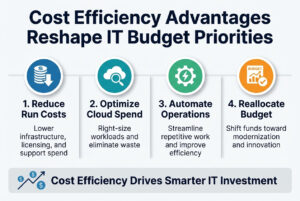
Cost Efficiency Advantages Reshape IT Budget Priorities
Cloud-based AI solutions reduce infrastructure investments
Organizations are discovering that AI-powered ERP solutions dramatically slash traditional IT infrastructure costs. Unlike legacy systems that demand expensive on-premise servers, data centers, and dedicated IT staff for maintenance, cloud-based AI solutions operate through subscription models that eliminate massive upfront capital expenditures.
The shift from traditional ERP system infrastructure to AI-driven enterprise solutions represents a fundamental change in how businesses allocate their IT budgets. Companies that previously spent hundreds of thousands of dollars on hardware, software licenses, and implementation services now access enterprise-grade functionality for a fraction of the cost. This transformation allows businesses to redirect capital toward growth initiatives rather than maintaining aging systems.
Cloud providers handle all the heavy lifting – server management, security updates, backup processes, and scaling requirements – while businesses pay only for what they use. The elastic nature of cloud infrastructure means companies can adjust their capacity based on demand, avoiding the common scenario where traditional ERP systems sit underutilized for months after expensive upgrades.
Automated processes minimize human resource requirements
Artificial intelligence enterprise software automates countless manual tasks that traditionally required dedicated personnel. Data entry, report generation, inventory tracking, and financial reconciliation now happen automatically, reducing the need for large teams to manage these repetitive processes.
The automation capabilities of AI vs traditional ERP systems show stark differences in efficiency. Where traditional systems required users to manually input data, generate reports, and monitor system performance, AI-powered solutions handle these tasks seamlessly in the background. This shift allows existing staff to focus on strategic decision-making and value-added activities rather than administrative work.
Smart automation extends beyond basic data processing. AI systems learn from patterns in business operations, identifying opportunities to streamline workflows and eliminate bottlenecks without human intervention. This intelligent automation reduces training costs, minimizes human error, and creates consistent processes across departments.
Predictive maintenance prevents costly system failures
AI-driven enterprise solutions monitor system health continuously, predicting potential failures before they impact business operations. This proactive approach prevents the costly downtime and emergency repairs that plague traditional ERP systems.
Traditional enterprise resource planning systems often fail at the worst possible times – during peak business periods or critical reporting deadlines. These failures result in lost productivity, emergency IT support costs, and potential revenue losses. AI-powered systems analyze performance patterns, resource usage, and system stress indicators to predict when maintenance is needed.
The predictive capabilities extend to identifying optimization opportunities that improve system performance while reducing operational costs. Instead of reactive troubleshooting, businesses can schedule maintenance during low-impact periods and address issues before they escalate into expensive problems.
| Cost Factor | Traditional ERP | AI-Powered Solutions |
|---|---|---|
| Infrastructure Investment | $500K-$2M upfront | $5K-$50K monthly |
| Staff Requirements | 10-20 FTE | 3-5 FTE |
| Maintenance Costs | $100K-$300K annually | Included in subscription |
| Downtime Impact | 24-72 hours | Sub-1 hour recovery |
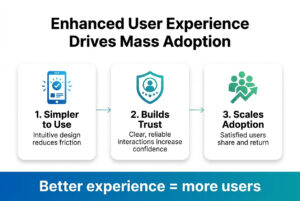
Enhanced User Experience Drives Mass Adoption
Intuitive interfaces require minimal training investments
AI-powered ERP solutions have completely changed how employees interact with enterprise software. Gone are the days when new hires needed weeks of training just to navigate basic ERP functions. Modern artificial intelligence enterprise software learns from user behavior and adapts its interface accordingly, making complex processes feel natural and straightforward.
The contrast with traditional ERP systems is striking. Legacy platforms often require extensive documentation, specialized training programs, and dedicated support teams to help users master even routine tasks. AI-driven enterprise solutions eliminate these barriers by presenting information in context-aware formats that match how people actually think and work.
Smart interfaces predict what users need before they ask for it. When a sales manager logs in, the system automatically surfaces relevant customer data, pending approvals, and performance metrics without requiring multiple clicks through nested menus. This predictive capability reduces training time from weeks to hours, dramatically lowering the total cost of ownership for enterprise resource planning modernization initiatives.
Mobile-first design supports remote workforce productivity
Today’s distributed workforce demands enterprise solutions that work seamlessly across devices and locations. AI-powered ERP solutions prioritize mobile accessibility from the ground up, recognizing that business decisions happen everywhere except the traditional office desk.
Unlike traditional ERP system implementations that treat mobile access as an afterthought, intelligent business automation platforms design core workflows around smartphone and tablet interactions. Sales teams can approve purchase orders during client meetings, warehouse managers can update inventory levels while walking the floor, and executives can review financial dashboards during their commute.
The mobile-first approach extends beyond simple responsive design. AI algorithms optimize screen layouts based on device capabilities, connection speeds, and user preferences. A finance director accessing the same report on a smartphone sees a condensed, swipe-friendly version that highlights critical metrics, while the desktop view provides detailed drill-down capabilities for deeper analysis.
Voice-activated commands streamline daily operations
Voice technology has transformed ERP interactions from typing-intensive processes into conversational exchanges. Warehouse workers wearing headsets can update shipment statuses hands-free, while accountants can query financial data using natural language instead of complex search parameters.
This shift represents more than convenience – it fundamentally changes how quickly employees can access and act on business information. A procurement manager can simply say “Show me all pending orders from our top three suppliers” instead of navigating through multiple screens and filters. The AI processes these requests in real-time, delivering accurate results faster than traditional menu-driven interfaces.
Voice commands also improve data accuracy by reducing manual entry errors. When workers can speak updates directly into the system while performing physical tasks, they’re more likely to record information immediately rather than relying on memory or handwritten notes that get transcribed later.
Personalized dashboards increase user engagement rates
AI vs traditional ERP systems showcase their biggest difference in how they present information to individual users. Traditional platforms display the same static dashboards to everyone in similar roles, regardless of their specific responsibilities or preferences. AI enterprise technology adoption thrives on personalization that makes each user feel like the system was designed specifically for them.
Machine learning algorithms analyze how different users interact with data and automatically adjust dashboard layouts, chart types, and information hierarchies to match individual work patterns. A regional sales manager might see territory performance front and center, while a product manager views inventory levels and demand forecasts as primary widgets.
This personalization extends beyond visual preferences. AI tracks which reports users access most frequently, what time of day they typically review specific metrics, and which data combinations they find most valuable. The system proactively surfaces this information at optimal times, creating a user experience that feels anticipatory rather than reactive.
The result is dramatically higher user engagement rates compared to traditional ERP implementations. When employees can quickly find relevant information presented in formats that match their thinking patterns, they naturally spend more time exploring data and making informed decisions rather than fighting with the interface.
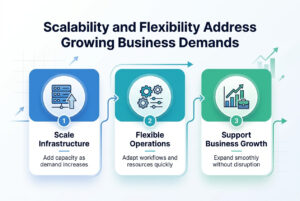
Scalability and Flexibility Address Growing Business Demands
Elastic computing resources adapt to fluctuating workloads
Traditional ERP systems buckle under pressure when businesses experience sudden spikes in demand or seasonal fluctuations. These legacy platforms require expensive hardware investments and lengthy provisioning processes to handle increased workloads. AI-powered ERP solutions completely flip this script by leveraging cloud-native architecture that automatically scales computing resources up or down based on real-time needs.
Modern AI enterprise technology adoption has made it possible for businesses to handle Black Friday traffic surges, end-of-quarter reporting demands, or unexpected market opportunities without breaking a sweat. The system intelligently allocates processing power, storage capacity, and network bandwidth as needed, then scales back during quieter periods to optimize costs.
Modular AI components integrate seamlessly across departments
The modular nature of AI-driven enterprise solutions creates unprecedented flexibility for organizations. Unlike monolithic traditional ERP systems that force departments to work within rigid structures, AI-powered platforms offer plug-and-play components that can be mixed and matched based on specific departmental needs.
Sales teams can deploy advanced predictive analytics modules while HR departments implement intelligent recruitment algorithms, all within the same ecosystem. These components share data seamlessly, creating a unified view of business operations without forcing departments to sacrifice their unique workflows or requirements.
| Department | AI Component | Integration Benefit |
|---|---|---|
| Sales | Predictive forecasting | Real-time pipeline visibility |
| Finance | Automated reconciliation | Instant cross-department reporting |
| Operations | Supply chain optimization | Dynamic resource allocation |
| HR | Intelligent matching | Skills-based project assignments |
Real-time configuration changes support rapid business pivots
Market conditions change fast, and businesses need systems that can pivot just as quickly. Traditional ERP system disruption often occurs because these platforms require weeks or months to implement configuration changes. AI-powered ERP solutions enable real-time adjustments that support immediate business pivots.
Companies can modify workflows, adjust approval processes, or restructure reporting hierarchies with just a few clicks. The AI continuously learns from these changes, suggesting optimizations and identifying potential bottlenecks before they impact operations. This agility has become critical for businesses navigating uncertain economic conditions or exploring new market opportunities.
Multi-tenant architecture serves diverse organizational structures
Enterprise resource planning modernization has brought multi-tenant capabilities that accommodate complex organizational structures without compromising security or performance. AI vs traditional ERP systems becomes particularly evident when comparing how each handles subsidiaries, joint ventures, or acquired companies.
AI-powered platforms can maintain separate data environments for different business units while enabling controlled data sharing where appropriate. Parent companies can access consolidated reporting across all entities while maintaining strict access controls and compliance requirements. The system automatically adjusts user permissions, data visibility, and reporting structures based on organizational hierarchy and business rules.
This architectural flexibility proves invaluable during mergers and acquisitions, where traditional systems often require complete overhauls. AI-driven systems simply create new tenant spaces and establish integration points, allowing newly acquired companies to maintain their existing workflows while gradually adopting standardized processes.
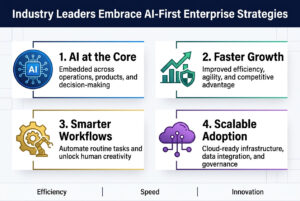
Industry Leaders Embrace AI-First Enterprise Strategies
Fortune 500 companies report measurable productivity gains
Major corporations across industries are abandoning traditional ERP system frameworks in favor of AI-powered enterprise solutions, with remarkable results. Microsoft reported a 35% reduction in financial close times after implementing AI-driven automation across their enterprise resource planning modernization initiative. Similarly, Unilever achieved 28% faster inventory turnover rates through intelligent business automation that predicts demand patterns with unprecedented accuracy.
The shift isn’t just about technology upgrades—it’s about fundamental business transformation. Companies like General Electric have documented 40% improvements in supply chain efficiency by replacing legacy systems with AI vs traditional ERP systems that adapt in real-time to market conditions. These artificial intelligence enterprise software platforms analyze massive datasets instantly, enabling decision-making that would take weeks using conventional approaches.
What sets these implementations apart is their ability to learn and improve continuously. Traditional systems require manual updates and configurations, while AI-powered ERP solutions evolve automatically based on usage patterns and business outcomes. This creates compounding productivity gains that accelerate over time rather than plateau like traditional implementations.
Small businesses leverage enterprise-grade AI capabilities affordably
The democratization of AI enterprise technology adoption has created unprecedented opportunities for smaller organizations. Cloud-based AI-driven enterprise solutions now offer Fortune 500-level capabilities at monthly subscription costs that rival basic accounting software. Companies with 50-200 employees can access the same intelligent automation tools that previously required million-dollar IT budgets.
Small manufacturers are experiencing dramatic improvements in production planning through AI business intelligence that was unimaginable just five years ago. A family-owned furniture company in North Carolina reduced waste by 42% using predictive analytics that optimize material usage and production scheduling. These systems integrate seamlessly with existing operations without requiring extensive IT infrastructure or specialized personnel.
The subscription model eliminates massive upfront costs while providing automatic updates and improvements. Small businesses gain access to continuously evolving capabilities without the burden of maintaining complex systems or hiring specialized technical staff.
Competitive advantages emerge through faster implementation cycles
Speed has become the ultimate differentiator in ERP system transformation. While traditional implementations typically require 12-18 months, AI-powered alternatives deploy in 6-12 weeks. This acceleration stems from pre-configured AI models that understand common business processes and adapt quickly to specific organizational needs.
Fast-moving companies exploit this timing advantage to capture market opportunities that competitors miss during lengthy system overhauls. A mid-sized logistics company gained 23% market share by implementing AI-enhanced route optimization while competitors remained stuck in traditional system upgrades that took over a year to complete.
The rapid deployment capabilities enable businesses to respond quickly to market changes and customer demands. Companies can test new business models, enter new markets, and adapt to economic shifts without being constrained by rigid, slowly-evolving technology infrastructure.
AI technology has fundamentally changed how businesses think about managing their operations. Traditional ERP systems, once the backbone of enterprise management, are struggling to keep up with the speed and intelligence that AI-powered solutions bring to the table. Companies are discovering that smart systems can deliver better insights, cut costs dramatically, and provide experiences that actually make work easier for their teams.
The shift isn’t just about having cooler technology—it’s about staying competitive. Organizations that stick with outdated ERP systems risk falling behind competitors who can adapt quickly, scale effortlessly, and make data-driven decisions in real time. If your business is still relying on traditional enterprise software, now is the time to explore AI alternatives. The companies that make this transition early will have a significant advantage in tomorrow’s marketplace.
Conclusion
If you want to make your ERP system you can contact us or directly call us our details are as follows:
Contact us via contact page :- https://udmcreative.com/contact/
Direct call us :- 03475159209
Location :- Sector C2 Haris Plaza Mirpur Azad Kashmir
Google Map:-


