

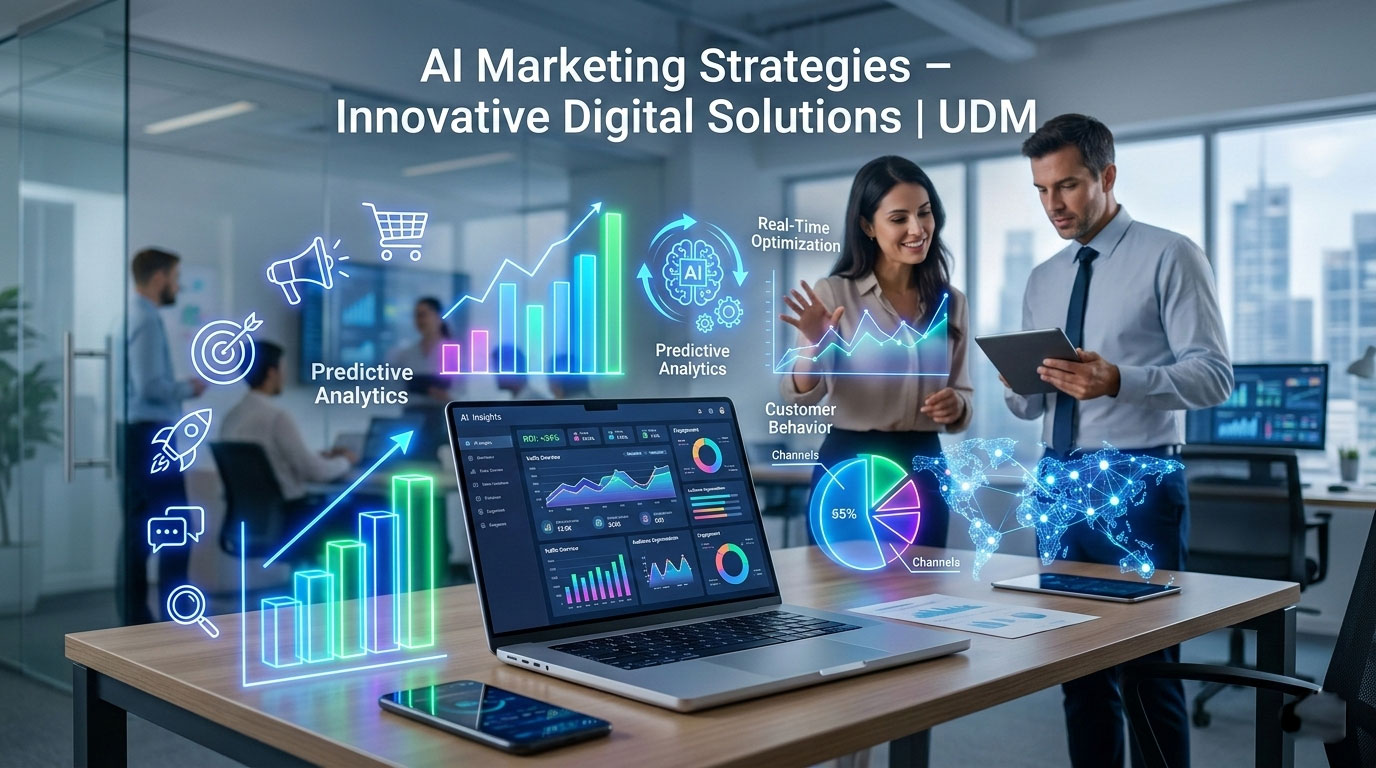
AI Marketing Strategies – Innovative Digital Solutions | UDM
Welcome to the future of marketing! If you’ve been hearing a lot about Artificial Intelligence (AI) and wondering what it truly means for your business, you’re in the right place. We’re not talking about science fiction anymore; AI is here, it’s powerful, and it’s reshaping how businesses connect with their customers, optimize campaigns, and drive growth. Forget the hype for a moment and let’s dive into the practical, game-changing AI marketing strategies that are already delivering incredible results for forward-thinking companies. At UDM, we believe in demystifying complex technologies and showing you exactly how they can unlock unprecedented potential for your digital solutions. Get ready to explore how AI can transform your marketing efforts from good to truly extraordinary.
The Dawn of AI in Marketing: Why It’s More Than Just a Buzzword
For many, AI still feels like a concept from a futuristic movie. But in the realm of digital marketing, it’s a very present and tangible reality, offering innovative solutions that were once impossible. When we talk about AI in marketing, we’re not envisioning robots taking over your creative team. Instead, picture intelligent systems that can analyze data faster, identify patterns more accurately, and automate tasks more efficiently than any human ever could. These are tools designed to augment human intelligence, freeing up marketers to focus on strategy, creativity, and the human connection that truly drives brand loyalty.
Understanding the AI Revolution in Marketing: A Friendly Introduction
At its core, AI in marketing refers to the application of artificial intelligence technologies—like machine learning, natural language processing, and predictive analytics—to enhance marketing efforts. This isn’t about replacing the marketer; it’s about empowering them with superpowers. Think of it as having an endlessly diligent, incredibly fast data analyst, content generator, and campaign optimizer all rolled into one. From understanding customer behavior to personalizing experiences and predicting future trends, AI offers a new dimension of insight and efficiency. It’s about making smarter, data-driven decisions, not just faster ones.
From Manual to Intelligent: The Evolution of Marketing
Marketing has come a long way from billboards and direct mail. We’ve moved through the eras of traditional advertising, the rise of the internet, the explosion of social media, and the age of big data. Each phase brought new tools and complexities. What AI represents is the next logical leap: moving from manually sifting through data and making educated guesses, to leveraging intelligent systems that can process vast amounts of information in real-time, identify subtle nuances, and even learn from past performance. It’s the evolution from reactive marketing to proactive, predictive, and precisely personalized engagement. This shift isn’t just an upgrade; it’s a fundamental change in how we approach every aspect of the marketing funnel.
Why Every Business Needs AI Marketing Strategies Now
In today’s hyper-competitive digital landscape, standing still is falling behind. Consumers expect personalized experiences, relevant content, and seamless interactions across multiple channels. Meeting these expectations at scale without AI is becoming increasingly difficult, if not impossible. Businesses that embrace AI marketing strategies gain a significant competitive edge. They can understand their customers better, reach them with more relevant messages, optimize their spending, and ultimately, drive higher conversion rates and customer loyalty. Ignoring AI isn’t just missing out on an opportunity; it’s risking obsolescence in a rapidly evolving market.
Setting the Stage for Smarter Growth
AI isn’t just about automation; it’s about intelligent automation that leads to smarter growth. By leveraging AI, marketers can achieve unprecedented levels of personalization, creating individual customer journeys that resonate deeply. They can boost efficiency by automating repetitive tasks, allowing teams to focus on high-value strategic initiatives. And perhaps most importantly, AI empowers businesses to achieve a superior return on investment (ROI) by optimizing every touchpoint, from ad spend to content delivery. It’s about working smarter, not just harder, to build a resilient and thriving business in the digital age.
Core Benefits: How AI Marketing Strategies Supercharge Your Campaigns
The real magic of AI in marketing lies in its ability to transform raw data into actionable insights and automate complex processes, leading to dramatically improved campaign performance. Let’s explore some of the key advantages that make AI marketing strategies indispensable for modern businesses.
Unlocking Deeper Customer Insights
Imagine having a magnifying glass that can reveal the intricate details of every customer’s journey, preferences, and behaviors across every platform. That’s what AI offers.
Hyper-Personalization at Scale
One of AI’s most celebrated capabilities is its power to deliver hyper-personalized experiences. Gone are the days of one-size-fits-all messaging. AI allows you to tailor content, product recommendations, email offers, and even website layouts to individual users in real-time.
Optimized Performance & ROI
Every marketer aims for maximum impact with minimum spend. AI makes this goal more attainable than ever.
Predictive Analytics for Proactive Marketing
Beyond understanding the present and optimizing for the immediate future, AI excels at looking ahead. Predictive analytics, a core component of advanced AI marketing strategies, uses historical data and machine learning algorithms to forecast future market trends, predict customer churn likelihood, anticipate purchase behaviors, and even identify emerging opportunities. This foresight enables marketers to shift from reactive campaigns to proactive, strategic planning. Imagine identifying at-risk customers before they leave, or knowing which products will trend next season – that’s the power of AI-driven prediction, giving you a powerful edge in a competitive marketplace.
Practical AI Marketing Strategies You Can Implement Today
The beauty of AI isn’t just in its potential, but in the practical applications available right now. Here’s how you can start integrating AI into your marketing efforts to see tangible results.
Intelligent Content Creation & Curation
Content is king, but creating vast amounts of high-quality, relevant content can be a monumental task. AI is a game-changer here:
- Leveraging AI tools for generation: AI writing assistants can help you brainstorm blog post ideas, generate compelling social media captions, craft attention-grabbing email subject lines, and even draft full articles or product descriptions. Tools like Jasper or Copy.ai (external reference example) are becoming increasingly sophisticated, providing a fantastic starting point for human editors to refine.
- Identifying top-performing content: AI algorithms can analyze your existing content’s performance, audience engagement, and competitor strategies to pinpoint what topics resonate most, what formats drive the most traffic, and what gaps exist in your content strategy. This ensures you’re investing your content creation efforts wisely.
Automated Customer Service & Support
Customer expectations for immediate support are higher than ever. AI can step in to provide scalable, 24/7 assistance:
- AI-powered chatbots: Implementing chatbots on your website or social media channels can instantly resolve common queries, guide users through FAQs, qualify leads by asking key questions, and even assist with sales, all without human intervention. This frees up your support team for more complex issues.
- Sentiment analysis: AI can analyze customer interactions (emails, chat logs, social media comments) to gauge sentiment, identifying frustrated customers or emerging issues before they escalate. This allows for proactive intervention and continuous improvement of service quality.
Precision Advertising & Audience Targeting
Ad spend is a significant investment, and AI ensures every dollar works harder:
- Optimizing ad placements and bids: AI algorithms, common in platforms like Google Ads and Meta Ads, dynamically adjust bids and optimize ad placements in real-time to reach the most receptive audience segments at the most opportune moments. This leads to lower costs per click and higher conversion rates.
- Programmatic advertising: AI powers programmatic advertising, automating the buying and selling of ad inventory.
Enhanced SEO & Voice Search Optimization
Staying visible in search results is vital, and AI provides powerful tools for SEO:
- Analyzing search intent and keywords: AI tools can delve deep into search queries, understanding not just the keywords used, but the underlying intent behind them. This helps you identify long-tail keywords, semantic relationships, and topics that truly address your audience’s needs.
- Optimizing for natural language and voice search: With the rise of voice assistants, optimizing for natural language queries is crucial. AI helps you understand how people speak their questions, allowing you to create content that directly answers those queries, boosting your visibility in voice search results.
- Competitor analysis and market gaps: AI can analyze competitor SEO strategies, identify their top-performing content, and uncover market gaps or under-served niches that you can target, giving you a strategic advantage. For more insights on optimizing your digital presence, check out UDM’s comprehensive guide on Advanced SEO Techniques (Internal Link Example).
Real-World Impact: Success Stories & Evidence of AI in Action
The adoption of AI marketing strategies isn’t just theoretical; it’s delivering measurable success across industries. These real-world examples showcase the transformative power of AI.
Case Study 1: E-commerce Personalization
Consider a popular online fashion retailer struggling with high bounce rates and abandoned carts. By implementing an AI-powered recommendation engine, they began analyzing each shopper’s browsing history, purchase patterns, and even real-time click behavior. The AI system then presented personalized product suggestions on their homepage, product pages, and in follow-up emails. The result? A significant 25% increase in conversion rates and a 15% rise in average order value within six months, simply by making the shopping experience more relevant and intuitive for each individual customer.
Case Study 2: Lead Generation & Nurturing
A B2B software company faced challenges in qualifying leads and nurturing them efficiently through their sales funnel. They deployed an AI chatbot on their website and integrated AI-driven email automation. The chatbot engaged visitors, answered initial questions, and qualified leads based on predefined criteria, passing only warm leads to the sales team. The AI email system then sent personalized follow-up sequences based on lead behavior and engagement. This strategy led to a 40% improvement in lead quality and a 20% reduction in the sales cycle duration, dramatically improving their sales team’s productivity.
Case Study 3: Content Optimization & Engagement
A niche online publisher was looking to boost organic traffic and reader engagement. They adopted an AI content analysis platform that identified trending topics within their industry, analyzed competitor content gaps, and optimized existing articles for better search engine visibility. The AI also suggested optimal posting times and content formats based on audience behavior. Within a year, the publisher saw a 30% increase in organic search traffic and a 10% rise in average time spent on page, demonstrating how AI can fine-tune content strategy for maximum impact.
Industry Insights & Data
These individual successes are part of a larger trend. Major industry reports consistently highlight the growing impact of AI in marketing. These reports confirm that AI is not just a passing fad but a fundamental shift in how successful businesses operate.


Amazon Dropshipping – Profitable E-commerce Solutions By UDM - Urban Dive Marketing
March 13, 2026 - 2:08 pm[…] AI Marketing Strategies – Innovative Digital Solutions | UDM […]
Custom Website Development – Build A Unique Website
May 14, 2026 - 9:32 am[…] AI Marketing Strategies – Innovative Digital Solutions | UDM […]
E-Commerce Web Design – Professional Solutions By UDM - Urban Dive Marketing
May 14, 2026 - 10:06 am[…] AI Marketing Strategies – Innovative Digital Solutions | UDM […]