


What Is Hotel Management Software and How Does It Actually Work?
If you have ever had to juggle a split-night booking during high season while calming an upset guest at the front desk, you already know why hospitality spreadsheets break down. At its simplest, what is hotel management software? It is an all-in-one digital operating hub that ties your core Property Management System (PMS) directly into your channel manager, online booking engine, and back-office accounts.
Instead of treating your front desk, housekeeping floor, and revenue channels as separate islands, the software acts as the central nervous system for your property.
Years ago, running a property meant investing in clunky local servers tucked inside a back office closet. Today, the shift toward the cloud has reshaped operational realities:
| Feature | Legacy Desktop Systems | Modern Cloud-Based Platforms |
|---|---|---|
| Data Syncing | Nightly manual batches; high lag | Instant two-way real-time updates |
| Access | Bound to on-site terminal hardware | Any browser, tablet, or smartphone |
| Security & Backups | Local drives prone to hardware failure | Encrypted offsite backups & auto-patches |
To see how this works in practice, follow a single reservation:
- A traveler reserves a deluxe queen on an Online Travel Agency (OTA) like Booking.com.
- The software picks up the reservation instantly, adjusts your master inventory, and auto-blocks that room across Expedia, Airbnb, and your direct website to prevent overbookings.
- The guest’s credit card is validated, a confirmation email fires off, and your housekeeping dashboard immediately flags the room for a priority turnover before 3:00 PM check-in.
The ultimate goal here is not just shiny tech. It is about protecting your bottom line. By removing manual data entry across multiple extranets, you stop double bookings in their tracks, curb costly front-desk miscommunications, and cut the administrative overhead that keeps your staff glued to computer monitors instead of welcoming guests.
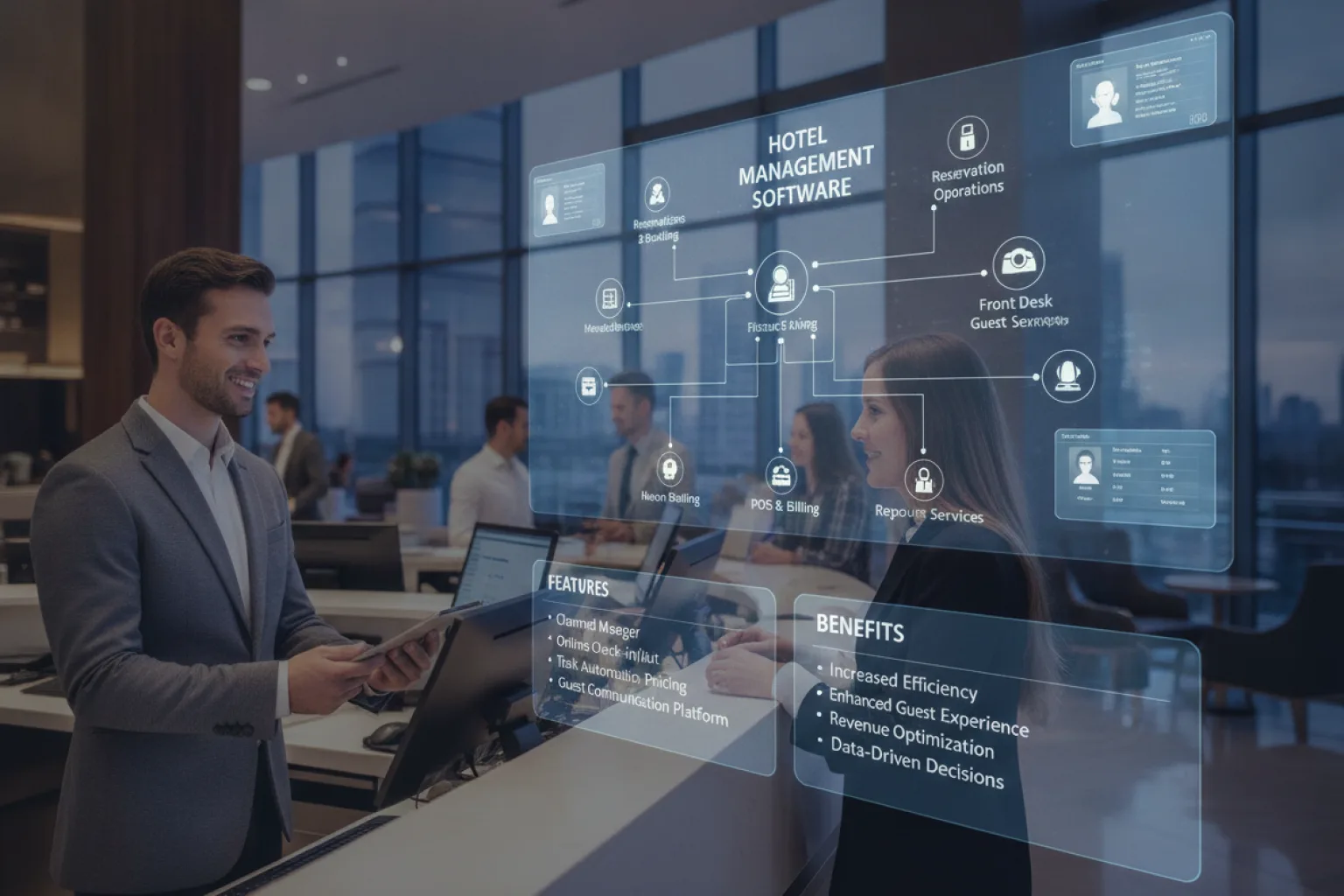
Essential Features Modern Hoteliers Cannot Operate Without
Understanding what is hotel management software starts with stripping away the marketing buzz and looking at the operational tools your team touches every shift. Without these core modules talking to each other, you are just running disconnected spreadsheets under a different name.
1. Front-Desk Engine & Dynamic Room Assignment
Your reservation engine should do more than log names. Look for systems that handle contactless check-in links via SMS and feature live availability grids that update instantly. The real test is dynamic room assignment: the system should reshuffle incoming reservations automatically to eliminate unbookable “gap nights” between stays, protecting your occupancy rates during peak weekends.
2. Two-Way Channel Management
Manually updating room allotments on third-party sites is an invitation for overbookings. A built-in channel manager uses direct two-way APIs to sync your central inventory across Booking.com, Expedia, and your direct site simultaneously. When a walk-in takes room 204, that room vanishes from every OTA within seconds.
| Core Module | Operational Bottleneck It Solves | What Breaks If Misconfigured |
|---|---|---|
| Mobile Housekeeping | Radio calls checking if rooms are turned | Premature check-ins to dirty rooms |
| Folio-Linked POS | Lost paper receipts from dining or spa visits | Disputed checkout charges and chargebacks |
3. Housekeeping and Maintenance Routing
Ditch the morning paper printouts. Modern setups run on lightweight mobile interfaces where floor staff tap a room from “dirty” to “clean” or “inspected.” If a guest in 312 reports a leaking shower, housekeeping flags it on their phone, which alerts maintenance and takes the room out of sellable inventory before the front desk accidentally assigns it.
4. Direct POS and Folio Integration
Avoid standalone card terminals at your restaurant or spa. A proper integration routes morning coffees, parking fees, and laundry costs straight to the guest’s open master folio with a room number verification. When the guest checks out, front-desk staff hand over one clean, consolidated invoice instead of reconciling five receipts from three different registers.
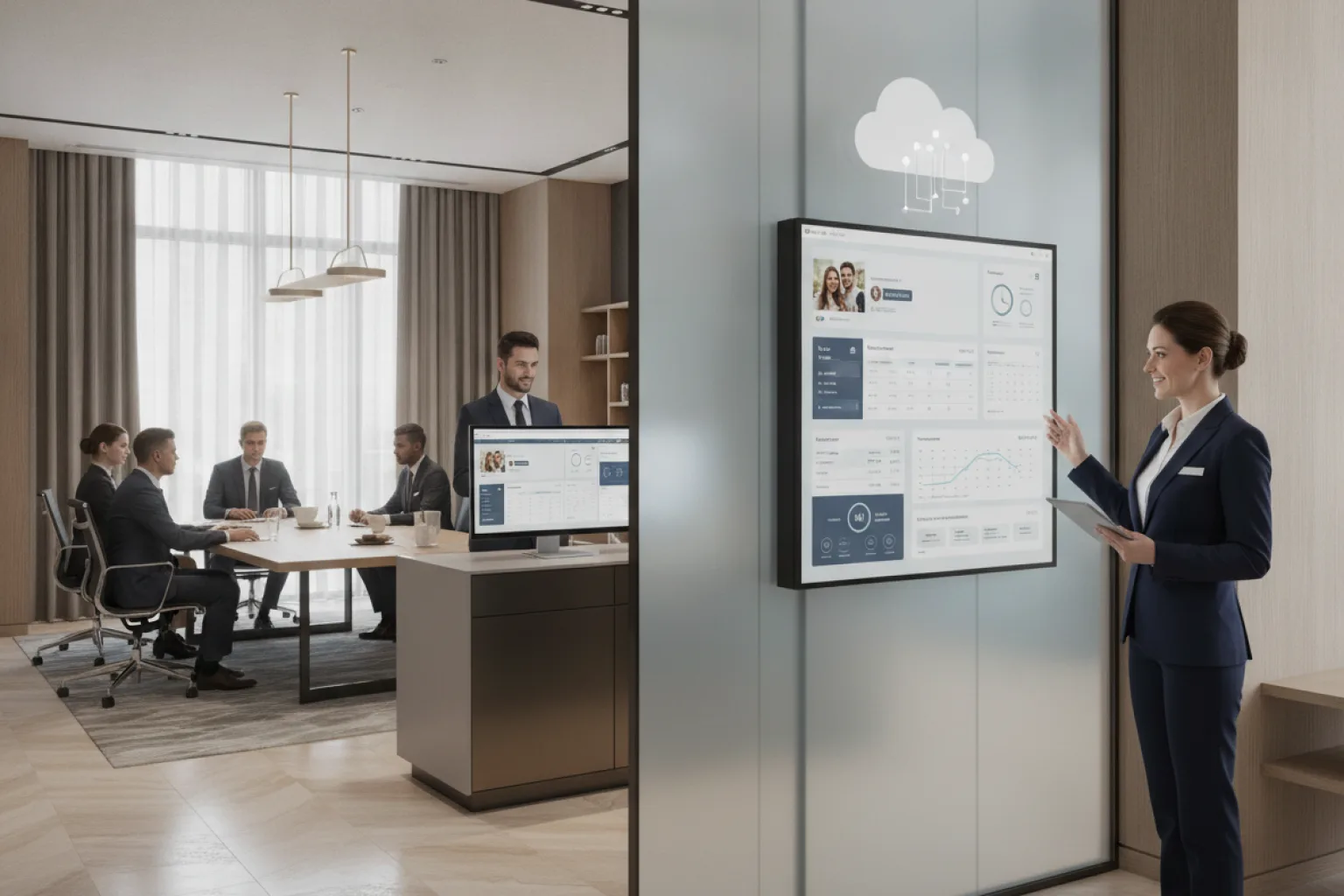
Quantifiable Benefits of Upgrading from Spreadsheets to an HMS
Running a property on Excel sheets and paper logbooks feels free until you tally up the hidden payroll leaks and missed revenue. If you are asking what is hotel management software capable of returning on your investment, the answer lies in hard operational math, not vague tech hype.
A purpose-built platform shifts you from reactive guesses to automated precision across three core areas:
- Dynamic room pricing: Instead of manually editing flat rates three times a year, dynamic pricing rules adjust rates instantly as your occupancy creeps past 70%, a concert announces dates nearby, or seasonal demand shifts. You capture the margin without living in a rate sheet.
- Recaptured labor hours: Automating pre-arrival check-in links and the daily night audit typically frees up 10 to 15 administrative hours per week. That is real payroll redirected toward guest service rather than chasing down billing mismatches.
- Higher guest lifetime value: Built-in guest profiles track past wine orders, room floor preferences, and anniversary dates across stays. Returning guests receive relevant offers, which drives direct spend instead of driving them back to third-party travel sites.
The impact shows up clearly when you compare day-to-day operations:
| Metric | Manual Tracking (Spreadsheets) | Modern HMS Setup |
|---|---|---|
| Rate updates | Static; adjusted weekly or monthly | Real-time adjustments based on demand triggers |
| Night audit | 60–90 minutes of manual data reconciliation | 5–10 minutes automated run time |
| Direct revenue | Dependent on slow email inquiries | Instant confirmation via embedded web engine |
Consider a real-world scenario: an independent 40-key boutique hotel operating on manual spreadsheets faced 22% OTA commissions on nearly every weekend stay. After connecting an integrated web booking engine directly to their new HMS, they grew direct bookings by 28% in six months. Slashing those commission payouts funded the software subscription for the entire year while keeping their front-desk team focused on hospitality rather than manual data entry.

Real-World Implementation Pitfalls and Hidden Software Costs
Getting clear on what is hotel management software is easy on paper; making it work in your lobby is where things get messy. Most implementation headaches don’t stem from bad tech. They happen when operators underestimate the connective tissue between systems, people, and budgets.
A common misstep is buying an attractive standalone property management system (PMS) without checking your hardware and payment processor. If your new software refuses to shake hands with your local payment gateway, your team ends up manually keying card transactions into physical terminals during check-in. That creates data silos, spikes reconciliation errors, and tests your guests’ patience after a long flight.
The sticker price rarely matches your final invoice, either. To calculate your true Total Cost of Ownership (TCO), you have to look for line items sales reps love to gloss over:
- Open API tolls: Some vendors charge monthly fees just to share data with third-party tools.
- Per-booking slice: Low subscription rates often hide a $1 to $3 cut on every direct reservation.
- Support tiers: 24/7 emergency phone support is frequently locked behind enterprise packages, leaving basic tiers stranded with slow ticketing systems on busy holiday weekends.
Beyond the numbers, your biggest obstacle is the front desk. Forcing a sudden platform swap on a Friday afternoon guarantees chaos. Protect your staff by demanding structured vendor onboarding and rolling out updates room-by-room or shift-by-shift during low occupancy.
You also face an architectural crossroads:
| Strategy | Upside | Trade-off |
|---|---|---|
| All-in-One Suite | Single login, zero integration headaches, predictable bills | Generic modules; basic revenue management tools |
| Best-of-Breed Stack | Specialized, top-tier tools for each department | Requires active API maintenance; multi-vendor finger-pointing |
If you run a boutique inn without an IT contractor, an all-in-one suite saves your sanity. Save the multi-app stack for when you have the internal resources to babysit regular webhooks and software updates.

How to Choose the Right HMS Based on Industry Standards and Expert Benchmarks
Buying a hospitality platform feels overwhelming because every sales rep claims their tool does everything. But understanding what is hotel management software capable of handling for your specific inventory cuts through the noise quickly.
Start with regulatory baselines. The American Hotel & Lodging Association (AHLA) and Hospitality Financial and Technology Professionals (HFTP) emphasize strict transaction and guest privacy safeguards. If a vendor cannot provide current PCI-DSS Level 1 certification and clear GDPR-compliant data processing workflows, walk away immediately.
Next, match software architecture to your operating footprint rather than overbuying features you will never touch.
| Property Profile | Recommended Architecture | Primary Operational Need |
|---|---|---|
| Boutique & B&B (1–25 keys) | Lightweight, mobile-first web app | Unified front desk, housekeeping status, simple OTA sync |
| Midscale Independent (26–150 keys) | Modular cloud PMS with open APIs | Dynamic rate management, POS add-ons, guest messaging |
| Multi-Property Group (150+ keys) | Enterprise central reservation & PMS | Cross-property reporting, pooled inventory, deep CRS integration |
Once you narrow the field, test them using reality, not slick marketing scripts. Send the sales engineer your actual weekend rate matrix, corporate discount rules, and odd room categories (like that two-room family suite with an adjoining balcony). Watching them configure live inventory exposes clunky menus and workarounds that their standard pitch decks hide.
Finally, read the fine print before your legal team does:
- Data portability: Ensure your agreement clearly states you own all guest folios and historical revenue records. If you switch vendors in three years, they shouldn’t charge an exit fee to export your database.
- SLA guarantees: Look for guaranteed 99.9% uptime during operational hours, paired with a mandatory sub-30-minute response time for critical system outages. When night audit stalls at 2:00 AM, an email ticketing queue won’t help you.
FAQS
What is hotel management software used for?
Think of it as the central nervous system for your property. At its core, hotel management software coordinates the chaotic moving parts of hospitality into one operational hub. Instead of checking a physical book for room availability, logging into Airbnb to tweak rates, and radioing housekeeping to see if room 204 is clean, staff handle everything through a single dashboard. It automates guest messaging, processes credit cards, updates inventory across channels, and stores guest preferences so your front desk knows Mr. Davis prefers extra feather pillows before he even asks.
What are the main features of hotel management software?
While modern suites offer dozens of niche tools, four core modules handle the heavy lifting:
| Module | What It Actually Does | Real-World Impact |
|---|---|---|
| PMS (Property Management System) | Handles reservations, check-ins, and guest billing | Replaces paper ledgers; speeds up the front desk |
| Channel Manager | Syncs rates and inventory to OTAs (Booking.com, Expedia) | Stops overbookings; eliminates manual extranet updates |
| Direct Booking Engine | Powers the reservation checkout on your own website | Saves you 15% to 25% in OTA commissions |
| Housekeeping & Maintenance | Mobile task assignment and room status tracking | Guests don’t get sent to dirty rooms at 3 PM |
How does hotel management software help a small hotel?
If you run a boutique inn, B&B, or a 15-room motel, you probably wear five hats before lunch. You don’t have a dedicated revenue manager or night auditor. For independent operators, knowing what is hotel management software capable of comes down to one thing: survival through automation.
Here is where smaller operators see an immediate return:
- Preventing costly double-bookings: When your last king suite sells on your direct website at midnight, the software instantly shuts it off across Expedia, saving you from a frantic re-accommodation nightmare.
- Streamlined staffing: Housekeepers update room statuses from their own phones the second they finish stripping linens, so your lone front-desk clerk knows instantly who can check in early.
- Hands-free guest communication: Automated confirmation, pre-arrival check-in links, and Wi-Fi codes go out automatically, making a three-person team feel like a fully staffed luxury boutique.
A quick word of caution: if you run fewer than 20 keys, avoid enterprise-grade platforms built for massive resort chains. You will end up paying for complex banquet and conference modules you will never touch, while your team gets bogged down by clunky training requirements. Keep it lean, cloud-based, and mobile-friendly.
Conclusion
When people ask, what is hotel management software, they usually expect a tech answer about databases and cloud portals. In reality, it is simply the operational spine of your property. It connects your midnight check-in with your morning breakfast count, your room attendant’s clipboard with your front desk queue, and your direct booking engine with third-party travel sites so you never double-sell Room 204.
Software alone will not fix a broken operational model. If your front desk team does not consistently mark rooms dirty or your night audit process is rushed, a five-thousand-dollar platform just speeds up your mistakes.
The biggest operational pitfall is over-buying. A ten-room boutique bed and breakfast does not need enterprise-grade revenue management algorithms; they need rock-solid guest messaging and a simple payment gateway. Conversely, a 150-room resort with a spa, dining rooms, and conference spaces will choke on a basic lightweight app within a week.
| Property Profile | Core Software Focus | Common Misstep |
|---|---|---|
| Boutique & B&Bs (Under 25 rooms) | Native channel manager, automated guest SMS, quick folio settlement | Buying sprawling systems with hefty setup fees |
| Full-Service Hotels (50+ rooms) | Deep POS integration, automated housekeeping dispatch, group billing | Choosing niche tools that lack open API connections |
Before signing a multi-year contract, look closely at where your team loses the most hours each week:
- Overbookings on peak weekends: Prioritize a platform with a built-in, real-time channel manager over external add-ons.
- Front desk bottlenecks at 3 PM: Hunt for frictionless contactless check-in modules that bypass the lobby entirely.
- Lost maintenance requests: Look for native mobile housekeeping apps that let room attendants attach photos of broken fixtures instantly.
Treat your tech stack as an operational hire. Pick a system that fits the staff you have today, solves your loudest headache, and gives your guests the smooth, quiet stay they actually paid for.
Ready to create the Custom Website or App? visit our Contact page or contact us on Whatsapp.

