

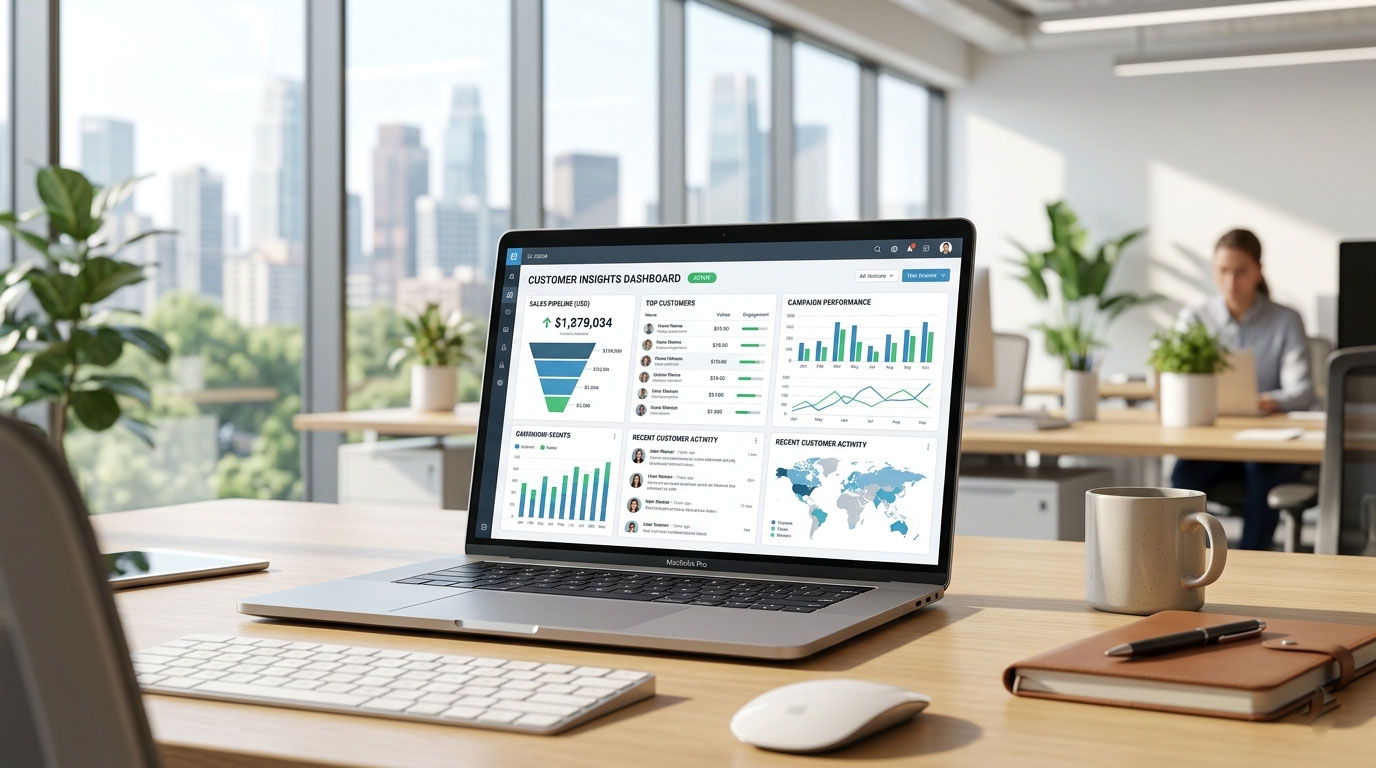
CRM Software Solutions – Streamline Customer Management
In today’s fast-paced business world, customer relationships are the lifeblood of any successful enterprise. From the smallest startup to the largest corporation, how you interact with, understand, and serve your customers directly impacts your bottom line and long-term viability. But managing all those interactions – leads, sales, support, marketing – can quickly become a chaotic mess without the right tools. That’s where CRM software solutions step in, transforming potential chaos into streamlined efficiency and turning fleeting interactions into lasting loyalty. If you’ve ever felt overwhelmed by scattered customer data, missed opportunities, or inconsistent service, you’re about to discover how a powerful CRM system can revolutionize the way you do business.
What Exactly is CRM Software, Anyway?
Let’s cut through the jargon and get to the heart of it. At its core, CRM stands for Customer Relationship Management. So, CRM software is simply a technology designed to help your company manage and analyze customer interactions and data throughout the customer lifecycle. The goal? To improve business relationships with customers, assist in customer retention, and drive sales growth.
Defining the Core: Beyond a Simple Contact List
Think of it this way: a basic spreadsheet or a rolodex (remember those?) might store contact names and numbers. But modern CRM software goes light-years beyond that. It’s a centralized hub where every piece of information about a customer or potential customer lives. This includes their contact details, purchase history, communication records (emails, calls, social media interactions), support tickets, website visits, and even their preferences and pain points. It’s a 360-degree view of your customer, updated in real-time.
Why It Matters: The Strategic Power of Connection
Why is this comprehensive view so crucial? Because it empowers your entire team to understand your customers deeply, anticipating their needs and delivering personalized experiences. When everyone in your organization – from sales and marketing to customer service and product development – has access to the same up-to-date customer insights, they can act cohesively and strategically. This isn’t just about efficiency; it’s about building stronger, more profitable relationships that fuel sustainable growth. It’s about remembering every detail, making every interaction feel personal, and ultimately, making your customers feel valued.
Types to Know: A Spectrum of Solutions
While the basic premise of managing customer relationships remains consistent, CRM software isn’t a one-size-fits-all solution. There are generally three main types, each with a slightly different focus:
- Operational CRM: This type focuses on automating and streamlining customer-facing processes like sales, marketing, and customer service. Think lead generation, sales pipeline management, and service automation.
- Analytical CRM: As the name suggests, this CRM type specializes in analyzing customer data to understand customer behavior, predict trends, and gain actionable insights. It helps you make data-driven decisions about marketing campaigns, product development, and customer segmentation.
- Collaborative CRM: This focuses on enabling different departments within an organization (e.g., sales, marketing, support) to share customer information seamlessly. The goal is to improve communication and coordination, ensuring a consistent and unified customer experience across all touchpoints.
Understanding these distinctions can help you pinpoint which type of CRM software might best address your business’s most pressing needs.
Why Your Business Can’t Afford to Skip CRM Software Solutions
If you’re still relying on disparate spreadsheets, sticky notes, and individual team members’ memories, you’re not just missing out on convenience; you’re actively hindering your business’s potential. CRM software solutions aren’t a luxury; they’re a fundamental component of modern business strategy.
Centralized Customer Data: No More Silos
Imagine this: a customer calls your support line with an issue. The support agent immediately sees their entire purchase history, previous interactions, and even recent website activity. They don’t have to ask the customer to repeat themselves or put them on hold while they dig through multiple systems. This is the power of centralized data. CRM software creates a single, unified view of every customer interaction, eliminating information silos and ensuring that every team member, from the CEO to the newest intern, is working from the same, accurate playbook. This consistent view is invaluable for delivering a seamless customer experience.
Boost Sales & Marketing Effectiveness: Precision Targeting
For sales teams, a robust CRM is like having a personal assistant for every lead. It helps track prospects through the sales funnel, automates follow-ups, and provides insights into which leads are most likely to convert. For marketing, CRM software enables highly targeted campaigns. Instead of broad-stroke emails, you can segment your audience based on behavior, demographics, or purchase history, delivering personalized messages that resonate. This precision leads to higher engagement, better conversion rates, and a significantly more efficient use of your marketing budget. We’ve seen businesses dramatically improve their lead-to-opportunity conversion rates simply by having a clearer, automated process within their CRM.
Enhance Customer Service & Loyalty: Personal Touch at Scale
Happy customers are loyal customers, and loyal customers are your best advocates. CRM software empowers your customer service team to deliver exceptional support. With instant access to a customer’s history, preferences, and previous issues, agents can provide faster, more informed, and highly personalized service. This proactive and efficient approach not only resolves problems quickly but also builds trust and strengthens customer relationships, fostering long-term loyalty. It moves you from reactive problem-solving to proactive relationship building.
Streamline Operations & Collaboration: Doing More with Less
Many day-to-day business tasks are repetitive and time-consuming. CRM software can automate a significant portion of these, from sending welcome emails to scheduling follow-up calls or updating sales stages. This automation frees up your team to focus on higher-value activities that require human ingenuity and connection. Furthermore, by providing a shared platform for communication and task management, CRM improves internal collaboration across departments, ensuring everyone is working together towards common customer-centric goals. This means less internal friction and more external success.
Data-Driven Decision Making: Insights, Not Guesses
One of the most powerful benefits of CRM software is its ability to transform raw data into actionable insights. Comprehensive reporting and analytics capabilities allow you to track sales performance, measure marketing ROI, identify customer trends, and pinpoint areas for improvement. You can see which products are selling best, which marketing channels are most effective, and where your customer service might be faltering. This evidence-based approach removes guesswork, allowing you to make smarter, more strategic decisions that drive business growth and profitability.
Essential Features to Look for in Top CRM Software
When you start exploring CRM software solutions, you’ll quickly realize there’s a vast array of features out there. To help you navigate this landscape, here are the non-negotiable functionalities that truly make a difference in day-to-day operations and long-term strategy.
Contact & Lead Management: The Foundation
This is the bedrock of any good CRM. You need practical tools for:
- Organizing Customer Information: A robust database to store all contact details, company information, roles, and relationships.
- Tracking Leads: The ability to capture leads from various sources (website forms, events, referrals) and track their journey through your sales funnel.
- Segmenting Your Audience: Tools to group customers and prospects based on criteria like demographics, behavior, or interests, allowing for targeted communication.
Without these, your CRM is just a digital address book, not a strategic asset.
Sales Automation: Supercharging Your Sales Team
Great CRM software takes the administrative burden off your sales team, allowing them to focus on selling. Look for:
- Pipeline Management: Visual tools to track deals at every stage, from initial contact to close. This helps predict revenue and identify bottlenecks.
- Quote Generation: Features to quickly create and send professional quotes and proposals.
- Automated Follow-ups: Reminders and automated email sequences to ensure no lead falls through the cracks.
- Task Management: Assigning and tracking sales activities, ensuring accountability and progress.
Marketing Automation: Engaging Prospects Effectively
Connecting your marketing efforts directly to your customer data is crucial for personalized engagement. Essential marketing automation features include:
- Email Campaigns: Tools to design, send, and track the performance of email newsletters and promotional campaigns.
- Social Media Management: Integration to monitor mentions, schedule posts, and engage with customers on social platforms.
- Lead Scoring: Automatically ranking leads based on their engagement and demographic data, helping sales prioritize.
- Personalized Content Delivery: Delivering relevant content based on a prospect’s stage in the buyer journey or their expressed interests.
Customer Service & Support: Beyond Basic Help Desks
Exceptional customer service builds loyalty. Your CRM software should empower your support team with:
- Ticketing Systems: Efficiently managing customer inquiries, assigning them to agents, and tracking resolution times.
- Knowledge Bases: A searchable library of FAQs and articles that customers can use for self-service, reducing inbound support volume.
- Live Chat Integration: Offering real-time support directly from your website.
- Self-Service Portals: Allowing customers to view their order history, track issues, and find answers independently.
Reporting & Analytics: Understanding Performance
You can’t improve what you don’t measure. Top CRM software provides:
- Customizable Dashboards: Visual summaries of key performance indicators (KPIs) for sales, marketing, and service.
- Reporting Functions: Detailed reports on sales pipeline health, campaign effectiveness, customer churn rates, and agent performance.
- Forecasting Tools: Helping you predict future sales and resource needs based on historical data.
These insights are critical for making informed business decisions and optimizing your strategies.
Mobile Access: CRM On-the-Go
In today’s mobile-first world, your team needs to access customer data and perform tasks from anywhere. Look for robust mobile applications that allow:
- Access to Contacts & Deals: Sales reps can update opportunities from the field.
- Logging Calls & Emails: Recording interactions immediately after they happen.
- Managing Tasks & Appointments: Staying organized while away from the desk.
The importance of this feature cannot be overstated for field sales teams or anyone who needs to stay connected outside the office.
Choosing the Right CRM Software for Your Unique Business Needs
Selecting the perfect CRM software isn’t like picking a ready-made suit; it’s more like tailoring one. What works for a large enterprise might overwhelm a small startup, and what suits an e-commerce giant might be irrelevant for a B2B service provider. This decision requires careful consideration.
Assess Your Specific Requirements: What Problem Are You Solving?
Before you even look at a single product, sit down with your team and identify your company’s biggest challenges. Are your sales leads slipping through the cracks? Is your customer service inconsistent? Are your marketing efforts feeling untargeted? What do you hope to achieve with new CRM software – sales growth, better service, improved efficiency, or all of the above?
- Pro Tip: Involve key stakeholders from sales, marketing, and customer service in this assessment. They are the ones who will use the system daily and can provide invaluable insights into their pain points and desired functionalities. Don’t just guess; ask!
Consider Scalability & Growth: Future-Proofing Your Investment
Your business today might be small, but hopefully, it won’t stay that way. The CRM software you choose should be able to grow with you.
- Can it accommodate more users without a complete system overhaul?
- Can it handle increasing volumes of data and more complex processes as your business expands?
- Does it offer advanced features or modules that you might need in the future (e.g., advanced analytics, internationalization, industry-specific functionalities)?
Choosing a scalable solution prevents the costly and disruptive process of migrating to an entirely new system a few years down the line.
Budget & Pricing Models: Understanding the True Cost
CRM software comes with various pricing structures, and it’s essential to understand them to avoid sticker shock.
- SaaS Subscriptions: Most modern CRMs are cloud-based and offered as a service, typically with monthly or annual per-user fees.
- Tiered Pricing: Often, vendors offer different tiers (Basic, Professional, Enterprise) with varying feature sets and support levels.
- Hidden Costs: Factor in potential costs for implementation, customization, data migration, training, and ongoing support.
Don’t just look at the base price; calculate the total cost of ownership over 3-5 years, including potential add-ons and growth. Sometimes, a slightly more expensive solution upfront can save you significant headaches and costs later if it meets your needs better.
Integration Capabilities: Connecting Your Digital Ecosystem
Your CRM software won’t operate in a vacuum. It needs to play nicely with your existing tools.
- Does it integrate seamlessly with your accounting software (e.g., QuickBooks, Xero)?
- Can it connect to your email marketing platform (e.g., Mailchimp, HubSpot Marketing)?
- How about your ERP system, project management tools, or communication platforms (e.g., Slack, Microsoft Teams)?
Poor integration leads to data silos, duplicate entry, and wasted time. Prioritize solutions that offer robust APIs or pre-built connectors to your critical business applications.
User-Friendliness & Vendor Support: Adoption is Everything
The most feature-rich CRM software is useless if your team doesn’t adopt it.
- Ease of Use: Is the interface intuitive? Is it easy to navigate and understand, even for non-tech-savvy users? A clunky system will lead to frustration and low adoption rates.
5 FAQs
- What is CRM software?
CRM (Customer Relationship Management) software helps businesses organize, track, and manage customer interactions efficiently. - How does CRM improve customer relationships?
It centralizes customer data, tracks communication, and enables personalized engagement, enhancing loyalty and satisfaction. - Can CRM boost sales performance?
Yes, by automating follow-ups, tracking leads, and providing analytics, CRM helps identify opportunities and increase conversions. - Is CRM suitable for small businesses?
Absolutely. Modern CRM solutions are scalable, cost-effective, and designed to support businesses of all sizes. - How secure is my data in a CRM system?
Reliable CRMs use encryption, secure cloud storage, and role-based access to protect sensitive customer information.
Conclusion
Implementing CRM software streamlines customer management, strengthens relationships, and drives business growth. Choosing the right solution ensures efficiency, better sales, and happier clients.
If you want to get Our Services, visit our Contact Us page or message us directly on WhatsApp.
Because we believe in continuous growth, we have curated a selection of posts to help you master the digital world. Furthermore, visiting our Blog Page regularly will keep you updated on the latest industry shifts.


UI/UX Design Course – Professional Training By UDM - Urban Dive Marketing
April 2, 2026 - 11:05 am[…] CRM Software Solutions – Streamline Customer Management […]