

The Pragmatic Truth: What is Artificial Intelligence Used For?
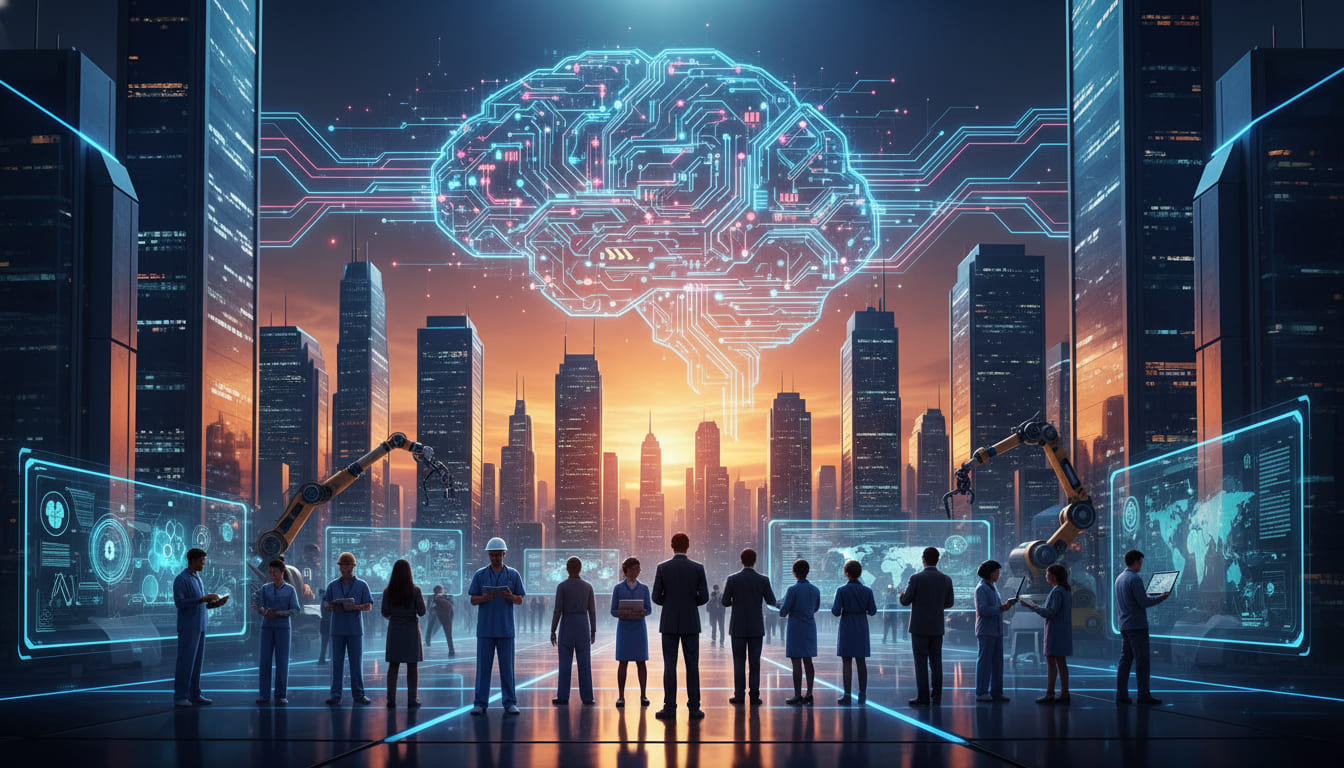
I spent the last decade auditing machine learning deployments for enterprise organizations. The boardroom conversations always start with the same baseline question: what is artificial intelligence used for in practical, revenue-generating terms? The reality is far less glamorous than cinematic fiction suggests, yet significantly more profitable. Forget sentient androids mapping human emotions. We are talking about stochastic gradient descent optimizing global supply chains, convolutional neural networks flagging anomalous network traffic, and natural language processing pipelines digesting decades of unstructured legal contracts in milliseconds. Algorithms lack intuition. They possess mathematics. That distinction is everything.
When executives ask me what artificial intelligence is used for, they are really asking how probabilistic models can reduce operational friction. To answer that definitively, we must look past the theoretical hype and examine the production-level code currently running in server racks across the globe. Below is an executive summary of current industrial AI deployment.
Executive Summary: Cross-Industry AI Utilization
| Industry Sector | Primary Algorithmic Application | Measurable Business Impact |
|---|---|---|
| Healthcare Diagnostics | Computer Vision & Image Segmentation | 30-40% reduction in false-negative pathology reports. |
| Quantitative Finance | Time-Series Forecasting & LSTM Networks | Sub-millisecond trade execution based on alternative data. |
| Digital Marketing | Predictive Behavioral Analytics | Hyper-personalized ad bidding and churn reduction. |
| Cybersecurity | Unsupervised Anomaly Detection | Real-time isolation of zero-day network intrusions. |
| Logistics | Heuristic Route Optimization | 15-20% decrease in fleet fuel consumption. |
What is Artificial Intelligence Used For in Healthcare Diagnostics?
During an implementation sprint at a mid-sized radiological research facility in 2021, I witnessed the immediate impact of properly trained diagnostic models. Pathologists often face severe visual fatigue by late afternoon. The human eye simply struggles to identify microscopic cellular anomalies after hours of continuous slide review. Here, artificial intelligence acts as an indefatigable second set of eyes. Convolutional Neural Networks (CNNs) are trained on millions of annotated tissue samples, learning to recognize the distinct pixel arrangements that correlate with early-stage malignancy. The algorithm does not replace the physician. It highlights areas of interest, forcing the human expert to take a closer look at a specific quadrant of the scan.
This symbiotic relationship between silicon and human intuition is transforming patient outcomes. Beyond basic imaging, AI is heavily utilized in pharmacological research. The traditional drug discovery pipeline is notoriously slow, often taking a decade and billions of dollars to bring a single therapeutic compound to market. By employing deep learning models, researchers can simulate how millions of different chemical structures will bind with specific biological targets. This computational filtering narrows down the pool of potential candidates from millions to mere dozens before physical laboratory testing even begins. If you want to understand the true scope of this, a fascinating deep dive by MIT Technology Review recently highlighted how machine learning architecture is predicting protein folding, a biological milestone that will redefine molecular medicine.
Furthermore, predictive analytics are being deployed in hospital triage environments. By analyzing electronic health records, vital sign history, and demographic data, supervised learning models can predict the likelihood of a patient developing sepsis hours before clinical symptoms manifest. This early warning system allows nurses to intervene proactively, demonstrating exactly what artificial intelligence is used for when human lives are hanging in the balance.
Algorithmic Finance and Quantitative Risk Mitigation
Wall Street has been utilizing rudimentary algorithms for decades, but the modern financial sector represents the bleeding edge of machine learning architecture. In the realm of quantitative trading, algorithms ingest data streams that humans could never process. We are not just talking about historical stock prices. These models analyze alternative data sources: satellite imagery of retail parking lots to predict quarterly earnings, natural language processing of global news sentiment to anticipate geopolitical market shocks, and credit card transaction telemetry to track consumer spending in real-time.
Long Short-Term Memory (LSTM) networks are particularly adept at handling this kind of time-series data. They recognize complex temporal patterns, executing trades in fractions of a second based on microscopic pricing inefficiencies. But beyond high-frequency trading, what is artificial intelligence used for in retail banking? The answer lies in risk mitigation and fraud detection. Traditional rule-based fraud systems are archaic. They rely on rigid parameters—if a transaction occurs in a foreign country, flag it. This creates massive friction through false positives. Modern AI approaches this through behavioral biometrics and unsupervised learning. The system learns the unique digital fingerprint of a user: how fast they type, their typical browsing hours, and their geographic mobility patterns. When a transaction deviates from this highly specific multidimensional cluster, the model triggers an alert. This nuanced approach saves financial institutions billions annually while preserving a seamless user experience.
Modern Marketing Operations and Predictive Behavior
The days of broad-spectrum demographic targeting are effectively dead. Today’s digital marketing ecosystem is a complex web of programmatic bidding, dynamic content generation, and predictive customer journey mapping. When consulting with innovative agencies like UDM Creative, I always emphasize that relying on historical data alone is a recipe for stagnation. You have to anticipate what the consumer will need before they explicitly search for it.
So, in the context of customer acquisition, what is artificial intelligence used for? It powers recommendation engines that analyze individual browsing vectors. If a user spends forty seconds hovering over a specific product variant without adding it to their cart, machine learning algorithms immediately adjust the retargeting strategy. The system might dynamically generate an email offering a hyper-specific discount or adjust the bid strategy for social media ad placements to ensure that exact product appears in their feed the next morning. Natural language generation is also revolutionizing copywriting. While human creativity remains paramount for high-level brand messaging, AI tools excel at multivariate testing. They can instantly generate thousands of ad copy variations, test them against segmented audiences, and automatically allocate budget to the permutations yielding the highest conversion rates.
Churn Prediction and Lifetime Value Optimization
Acquiring a customer is expensive; losing one is catastrophic. Machine learning models analyze user engagement metrics to calculate a probability score for customer churn. If a subscriber’s login frequency drops by twenty percent over a two-week period, and their support ticket volume increases, the algorithm flags them as a high-flight risk. This triggers automated retention protocols, perhaps deploying a dedicated account manager or offering an unsolicited service upgrade. By identifying these microscopic behavioral shifts, companies maintain recurring revenue pipelines with surgical precision.
Cybersecurity Threat Telemetry: What is Artificial Intelligence Used For?
The modern threat landscape is entirely asymmetric. Malicious actors utilize automated scripts to probe enterprise networks thousands of times per second. Human security analysts simply cannot monitor this volume of network telemetry manually. I remember sitting in a security operations center in late 2019, watching an AI-driven intrusion detection system isolate a ransomware payload that bypassed every traditional firewall signature. The malware was entirely novel—a zero-day threat. Standard antivirus software missed it because the file hash was unknown. However, the artificial intelligence model did not care about the file’s signature; it cared about its behavior.
The algorithm noticed that a dormant executable suddenly attempted to initiate unauthorized encryption protocols while simultaneously pinging an external IP address associated with a known botnet. Within milliseconds, the AI severed the endpoint’s network connection, quarantining the threat before lateral movement could occur. This shift from signature-based detection to behavioral analytics is perhaps the most critical advancement in enterprise security. According to ongoing research by Gartner, organizations deploying AI-augmented cybersecurity frameworks reduce their breach lifecycle by weeks, directly mitigating the financial devastation associated with data exfiltration.
What is Artificial Intelligence Used For in Agricultural Yield Mapping?
People rarely associate the dirt and diesel of agriculture with cutting-edge neural networks, yet precision farming is one of the most fascinating use cases I have audited. The global population is expanding, arable land is shrinking, and climate patterns are increasingly erratic. The margin for error in crop management is practically nonexistent. Modern tractors are effectively mobile data centers, equipped with LIDAR, multi-spectral cameras, and soil sensors. But raw data is useless without interpretation.
Artificial intelligence ingests this massive telemetry to dictate localized farming strategies. Instead of spraying an entire field with herbicides uniformly, computer vision algorithms analyze live camera feeds from the tractor booms. They differentiate between the specific crop and the invasive weed species in real-time, triggering micro-sprayers to hit only the weeds. This drastically reduces chemical usage, lowering overhead costs and minimizing environmental runoff. Furthermore, predictive models analyze historical weather data, current soil moisture levels, and satellite topography to accurately forecast crop yields months before the harvest. This allows farmers to negotiate better futures contracts and optimize their logistics pipeline.
Industrial Manufacturing and Predictive Maintenance
When heavy machinery breaks down unexpectedly, entire production lines grind to a halt. The cost of unplanned downtime in industrial manufacturing can easily exceed tens of thousands of dollars per minute. Traditionally, factories operated on a preventive maintenance schedule—replacing parts every six months regardless of their actual condition. This resulted in wasted resources and premature component disposal.
Through the implementation of the Industrial Internet of Things (IIoT), sensors are attached to every critical motor, bearing, and hydraulic press. These sensors stream acoustic vibration data and thermal readings continuously. Machine learning algorithms establish a baseline of normal operational acoustics. When a bearing begins to degrade, its acoustic signature changes imperceptibly weeks before a physical failure occurs. The AI detects this microscopic frequency shift and automatically schedules a maintenance window during off-peak hours. The economic efficiency of this approach is staggering. Studies published by McKinsey consistently validate that predictive maintenance driven by AI can reduce machine downtime by massive margins, proving that the true value of machine learning lies in anticipating failures before they manifest.
Supply Chain Architecture and Heuristic Routing
Global logistics is a fragile ecosystem governed by chaotic variables: weather delays, port congestion, fluctuating fuel costs, and shifting geopolitical tariffs. Traditional supply chain software struggles to adapt to sudden disruptions. If a major shipping canal is blocked, static models fail entirely. AI thrives in this chaos. By employing heuristic algorithms and deep reinforcement learning, logistical networks can dynamically reroute cargo based on real-time global telemetry.
These models do not just find the shortest path; they calculate the most probabilistically resilient path. They will reroute a shipment to a longer physical route if predictive weather models indicate an incoming storm on the primary vector, calculating the precise trade-off between fuel expenditure and guaranteed delivery windows. Inside the warehouse, autonomous robotics powered by computer vision optimize inventory storage, constantly reorganizing pallet placements based on predictive demand models. If the AI determines that a specific consumer electronics device will experience a surge in demand next month, it instructs the automated forklifts to move those pallets closer to the loading docks during idle night shifts.
Navigating the Future of Algorithmic Implementation
As we push towards more complex architectures, the fundamental question of what is artificial intelligence used for will continually evolve. We are moving away from narrow, task-specific algorithms toward more generalized, multi-modal foundations. These systems will not just analyze text or images in isolation; they will process audio, visual, and spatial data simultaneously to construct holistic operational strategies. However, the core directive remains unchanged. The most successful implementations will always be those that quietly remove operational friction, replacing human guesswork with mathematical certainty. The organizations that thrive will not be those that adopt AI for the sake of novelty, but those that wield it as a precision instrument to dissect and solve deeply specific business challenges.


