

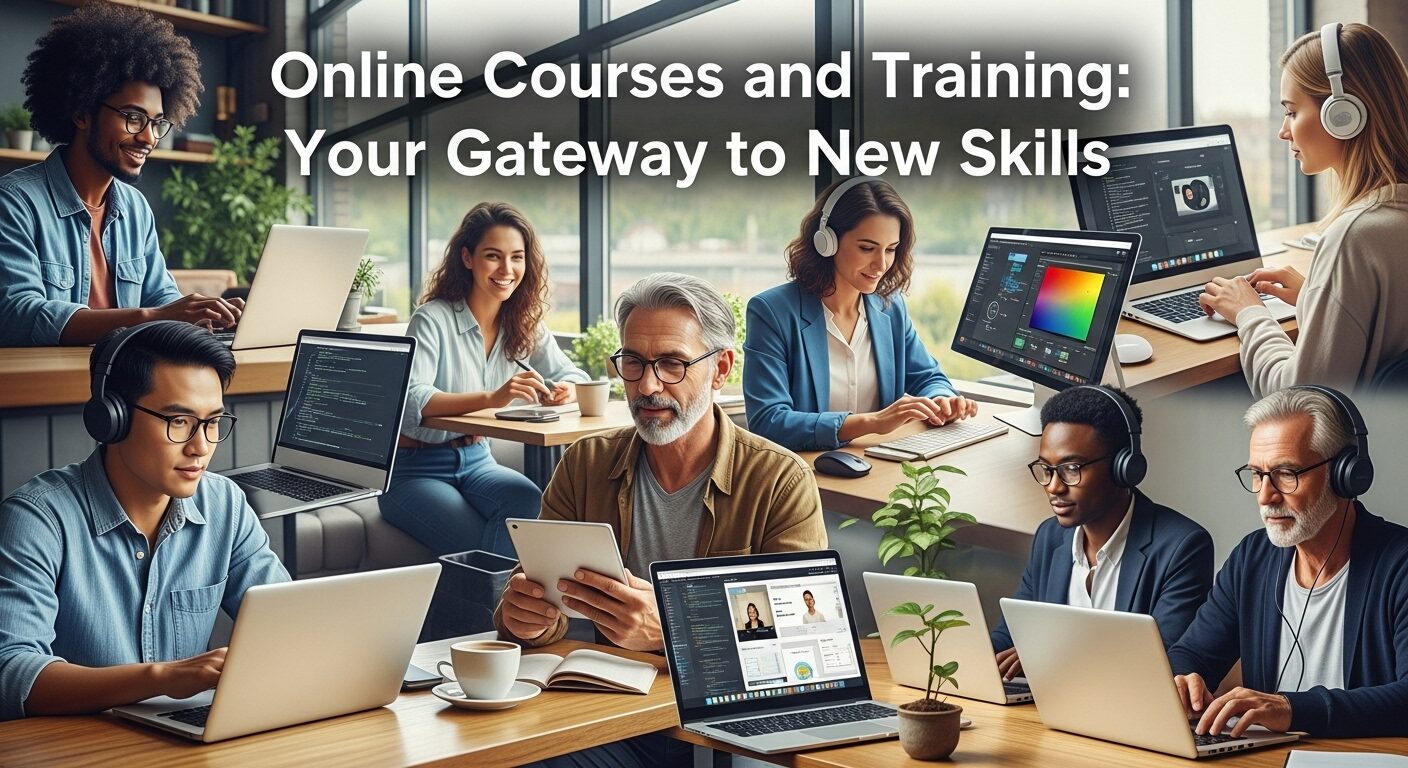
Online Courses and Training: Your Gateway to New Skills
The landscape of education and professional development has been dramatically reshaped by technology. In fact, online courses and training programs have emerged as a cornerstone of lifelong learning, offering unparalleled flexibility and access to knowledge. These digital learning opportunities cater to a diverse audience, from students seeking to supplement their traditional education to professionals aiming to upskill or reskill in a rapidly evolving job market. Consequently, understanding the scope and benefits of these programs is crucial for anyone looking to advance their career or personal growth.
The Evolution of Online Courses and Training
The concept of distance learning is not new; however, the advent of the internet truly revolutionized its delivery. Initially, online courses and training were often text-heavy and lacked interactive elements. Nevertheless, significant advancements in digital technology and pedagogical approaches have transformed them into engaging and dynamic learning experiences.
From Correspondence to Digital Classrooms
Historically, distance education involved physical mail and limited interaction. Over time, as technology progressed, early forms of online learning began to appear, primarily through static web pages and email. These initial offerings laid the groundwork for what we see today. For example, universities started experimenting with delivering course materials online, albeit in a rudimentary fashion.
The Rise of Modern Learning Platforms
Today, modern learning management systems (LMS) and specialized platforms like Coursera, edX, and Udemy provide rich, multimedia-driven content. They incorporate video lectures, interactive quizzes, discussion forums, and virtual labs. Moreover, these platforms often feature peer-to-peer learning and direct instructor interaction, thereby mimicking many aspects of a traditional classroom environment. This evolution has made online courses and training more effective and accessible than ever before.
Benefits of Pursuing Online Courses and Training
Choosing to engage in online courses and training offers a multitude of advantages that appeal to a wide range of learners. Ultimately, these benefits contribute to a more inclusive and adaptable educational system.
Unmatched Flexibility and Convenience
One of the most significant advantages is the flexibility they provide. Learners can access course materials and complete assignments according to their own schedules, making it ideal for those balancing work, family, or other commitments. Therefore, individuals can learn at their own pace, pausing and replaying content as needed to ensure comprehension.
Enhanced Accessibility for All
Online courses and training break down geographical barriers. Consequently, individuals in remote areas or those with mobility challenges can access world-class education that might otherwise be unavailable. Furthermore, many platforms offer accessibility features, such as closed captions and transcripts, ensuring a broader reach.
Cost-Effectiveness and Value
Often, online programs are more affordable than their on-campus counterparts. This is due to reduced overheads for institutions and savings for students on commuting, accommodation, and other associated costs. In addition, many free or low-cost options are available, providing excellent value for skill development.
Diverse Range of Offerings
From coding and data science to creative writing and culinary arts, the array of online courses and training available is truly immense. This vast selection allows learners to pursue niche interests or acquire highly specialized skills that might not be offered locally. Moreover, the content is frequently updated, ensuring relevance in fast-changing fields.
Choosing the Right Online Courses and Training Program
With countless options available, selecting the appropriate online courses and training program requires careful consideration. It is important to align your choice with your personal and professional goals.
Assessing Accreditation and Recognition
For career advancement, check if the course or institution is accredited or recognized by relevant industry bodies. A recognized credential can significantly boost your resume. However, for personal enrichment, accreditation may be less critical.
Evaluating Course Content and Structure
Carefully review the syllabus and learning objectives. Does the content cover the topics you need? Is the structure logical and progressive? Furthermore, consider the type of learning activities involved, such as projects, exams, or discussions.
Instructor Qualifications and Support
Research the instructors’ backgrounds and expertise. Are they leaders in their field? Additionally, investigate the level of instructor support and interaction provided. Some courses offer direct Q&A sessions, while others rely more on peer forums.
Reading Reviews and Testimonials
Before committing, seek out reviews from past students. Their experiences can offer valuable insights into the course quality, instructor effectiveness, and overall learning experience. Consequently, you can make a more informed decision.
Considering Your Learning Style
Reflect on how you learn best. Do you prefer video lectures, reading, or hands-on projects? Some online courses and training are highly interactive, whereas others are more self-directed. Choosing a program that aligns with your preferred style will enhance your success.
Popular Fields for Online Courses and Training
Certain sectors have particularly embraced online courses and training, offering robust pathways for career development. These fields often demand continuous learning due to rapid technological advancements.
Technology and IT
This is perhaps the most prominent area. Online courses and training in programming languages (Python, Java), data science, cybersecurity, web development, and cloud computing are highly sought after. Moreover, certifications from tech giants like Google and Microsoft are widely available online.
Business and Management
Professionals can pursue online MBAs, project management certifications, digital marketing courses, and leadership training. These programs help individuals develop essential skills for navigating complex business environments. Furthermore, they often include practical case studies and real-world applications.
Creative Arts and Design
From graphic design and photography to animation and music production, the creative industries offer numerous online learning opportunities. These courses often leverage specialized software and portfolio-building projects. Consequently, aspiring artists and designers can hone their craft remotely.
Health and Wellness
Online courses and training are also prevalent in healthcare, covering topics from nursing continuing education to nutrition and fitness coaching. This sector benefits from the ability to disseminate up-to-date medical knowledge efficiently. In addition, many programs offer certifications recognized by health organizations.
Maximizing Your Online Learning Experience
To truly benefit from online courses and training, adopting effective strategies is essential. Simply enrolling is not enough; active engagement is key to success.
Set Clear Goals and Stay Organized
Before starting, define what you hope to achieve. Break down your learning journey into smaller, manageable goals. Furthermore, create a dedicated study schedule and stick to it. Tools like calendars and task managers can be incredibly helpful.
Engage Actively with Content and Peers
Don’t just passively consume information. Participate in discussion forums, ask questions, and collaborate with fellow students. Active engagement deepens understanding and builds a valuable network. Moreover, teaching others what you’ve learned can solidify your own knowledge.
Practice Regularly and Apply Knowledge
Theoretical knowledge is important, but practical application is paramount. Work on projects, solve problems, and seek opportunities to apply what you’ve learned in real-world scenarios. Consequently, this reinforces your skills and makes them more tangible.
Take Breaks and Avoid Burnout
Learning, especially online, can be intense. Schedule regular breaks to avoid mental fatigue. Short breaks can actually improve focus and retention. Ultimately, maintaining a healthy balance is crucial for long-term success.
If you Want any Guide Visit our Contact page or contact us on Whatsapp.


