

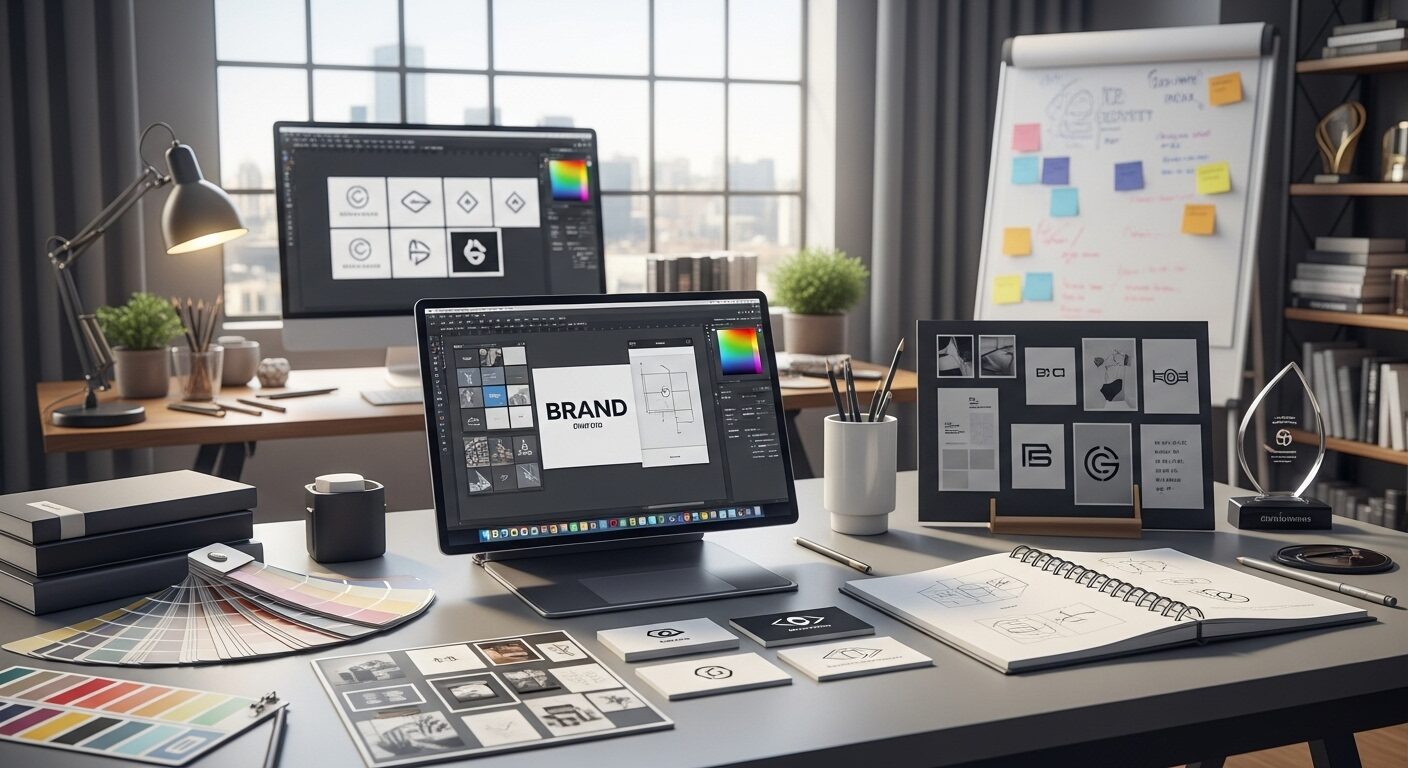
Custom Visual Identity Design for Companies: Your Brand’s Blueprint
In today’s competitive marketplace, a strong brand presence is not merely an advantage; it is a necessity. For companies aiming to stand out, Custom Visual Identity Design for Companies offers the strategic foundation. This isn’t just about a logo; instead, it encompasses the entire visual language your brand uses to communicate with its audience. Therefore, a well-crafted visual identity acts as a silent ambassador, conveying your values, personality, and professionalism long before words are exchanged.
Indeed, a custom visual identity is the essence of how your company is perceived. It includes everything from your logo and color palette to typography, imagery, and even the overall aesthetic of your marketing materials. Ultimately, a cohesive and memorable visual identity helps foster recognition, build trust, and differentiate your business from competitors. Consequently, investing in this crucial element is investing in your company’s future success and market longevity.
Why Custom Visual Identity Design for Companies Matters
Many businesses underestimate the profound impact of a tailored visual identity. However, its importance extends far beyond simple aesthetics. A unique visual identity serves multiple critical functions for any company aiming for sustainable growth and recognition.
Differentiation in a Crowded Market
Firstly, the market is saturated with businesses offering similar products or services. Therefore, standing out is paramount. Custom Visual Identity Design for Companies provides that unique edge. It ensures your brand doesn’t blend in but rather captures attention and leaves a lasting impression. Consider, for example, how iconic brands are instantly recognizable through their visual cues alone. This distinctiveness helps potential customers remember you.
Building Brand Recognition and Recall
Secondly, consistent visual elements foster instant recognition. When your logo, colors, and fonts are consistently applied across all touchpoints, customers begin to associate them exclusively with your brand. This repetition builds strong brand recall. Moreover, strong recall means that when a need arises, your company is more likely to be the first one that comes to mind. This is a powerful psychological advantage.
Fostering Trust and Credibility
Furthermore, a professional and cohesive visual identity signals credibility. It conveys that your company is established, reliable, and pays attention to detail. Conversely, a haphazard or outdated visual identity can inadvertently suggest a lack of professionalism or stability. Consequently, customers are more likely to trust and engage with a brand that presents itself with a polished and consistent image. This trust is invaluable for customer loyalty.
Communicating Brand Values and Personality
Crucially, your visual identity is a powerful non-verbal communicator. The choice of colors, the style of typography, and the imagery used all convey specific messages about your brand’s personality and values. For instance, a vibrant color palette might suggest innovation and energy, while a subdued palette could imply sophistication and tradition. Effective Custom Visual Identity Design for Companies articulates these intrinsic qualities without uttering a single word.
Key Components of a Robust Visual Identity
Developing a comprehensive visual identity involves meticulous attention to several interconnected elements. Each component plays a vital role in shaping how your brand is perceived and ensuring consistency across all platforms. Therefore, a holistic approach is essential.
The Logo: Your Brand’s Cornerstone
The logo is arguably the most recognizable element of a visual identity. It is the primary visual representation of your company. A well-designed logo is simple, memorable, versatile, and timeless. It should effectively communicate your brand’s essence at a glance. Moreover, it must be adaptable for various applications, from a small favicon to a large billboard. This versatility is critical for modern branding.
Color Palette: Setting the Mood
Colors evoke emotions and associations. Therefore, selecting the right color palette is crucial for setting the desired mood and conveying your brand’s personality. A primary color, along with complementary secondary and accent colors, forms the core of your brand’s visual language. Consistency in color usage reinforces brand recognition and creates a harmonious visual experience. Furthermore, specific colors can even influence consumer behavior.
Typography: The Voice of Your Brand
Typography refers to the style and appearance of text. The fonts you choose for your headlines, body copy, and other textual elements contribute significantly to your brand’s overall tone and readability. Often, a brand will use a primary font for headings and a secondary font for body text to create visual hierarchy and maintain consistency. Thoughtful typography enhances readability and reinforces your brand’s personality. Indeed, different fonts convey different feelings.
Imagery and Iconography: Visual Storytelling
Beyond logos, the style of photography, illustrations, and icons you use defines your brand’s visual storytelling. Whether your brand uses realistic photos, abstract illustrations, or minimalist icons, consistency in this visual language is key. This helps create a cohesive aesthetic that resonates with your target audience. Consequently, a clear direction for imagery ensures all visual assets align with your brand message.
Brand Guidelines: The Rulebook
Finally, all these elements are codified in a comprehensive set of brand guidelines. This document outlines the correct usage of every visual asset, including logo variations, color codes, typography rules, imagery styles, and even tone of voice. Brand guidelines are indispensable for maintaining consistency across all internal and external communications, especially as your company grows. They ensure that every visual representation of your brand is on point.
The Process of Crafting Custom Visual Identity Design
Developing a compelling visual identity is a structured process that typically involves several key stages. Engaging with experienced designers is crucial for navigating these steps effectively. Thus, a collaborative approach yields the best results.
1. Discovery and Research
The initial phase involves deep dives into your company’s mission, vision, values, target audience, and competitive landscape. Designers will conduct thorough research to understand your unique selling propositions and market position. This foundational knowledge is essential for creating a visual identity that is not only aesthetically pleasing but also strategically sound. Indeed, this step lays the groundwork for all subsequent design decisions.
2. Conceptualization and Strategy
Based on the research, designers begin to develop strategic concepts. This stage often involves brainstorming, mood boards, and initial sketches to explore various visual directions. The goal is to translate abstract brand attributes into tangible visual ideas. This phase ensures that the design direction aligns perfectly with your brand’s objectives and target audience. Therefore, feedback at this stage is invaluable.
3. Design and Development
With a chosen concept, the design team moves into the detailed development of the logo, color palette, typography, and other visual elements. This iterative process involves creating multiple design variations, refining them based on feedback, and ensuring every component works cohesively. High-quality Custom Visual Identity Design for Companies demands precision and creativity during this phase. Moreover, attention to detail here prevents future inconsistencies.
4. Implementation and Application
Once the visual identity is finalized, the next step is its implementation across all brand touchpoints. This includes designing business cards, stationery, website elements, social media graphics, packaging, and marketing collateral. The design team ensures that the new visual identity is correctly and consistently applied across all mediums. This comprehensive application is vital for a strong brand presence. Consequently, proper implementation brings the identity to life.
Beyond Aesthetics: The Strategic Impact
A well-executed custom visual identity is more than just a pretty face; it’s a powerful strategic asset that drives business outcomes. Understanding its broader impact helps companies appreciate the return on their design investment.
Enhancing Brand Equity
Brand equity refers to the value a brand adds to a product or service. A strong visual identity significantly contributes to brand equity by making your brand more recognizable, desirable, and trustworthy. This increased equity can lead to higher customer loyalty, premium pricing opportunities, and a stronger market position. Ultimately, it builds a valuable asset for your company.
Boosting Marketing Effectiveness
Consistent visual identity makes all your marketing efforts more effective. When your advertisements, social media posts, and website all speak the same visual language, they reinforce each other. This synergy increases message recall and strengthens brand association. Consequently, your marketing budget yields better results because every piece of communication contributes to a unified brand image. This consistency is a force multiplier.
Attracting and Retaining Talent
Furthermore, a strong visual identity also appeals to potential employees. A company with a professional and appealing brand image is often perceived as a more desirable place to work. This can help attract top talent and foster a sense of pride and belonging among current employees. Therefore, your brand’s visual appeal extends beyond customers to your internal team. It reflects positively on company culture.
Facilitating Future Growth and Expansion
Finally, a robust and scalable visual identity is crucial for future growth. As your company expands into new markets or introduces new products, a well-defined visual system can easily accommodate these changes while maintaining brand consistency. This adaptability prevents the need for costly redesigns down the line. Indeed, it provides a stable foundation for evolution.
Choosing the Right Partner for Your Design Needs
Selecting the right design agency or professional for Custom Visual Identity Design for Companies is a critical decision. The quality of your visual identity will directly impact your brand’s success. Therefore, careful consideration is advised.
Experience and Portfolio
Look for designers with a strong portfolio showcasing diverse projects and demonstrable expertise in visual identity development. Their past work should reflect a deep understanding of branding principles and a track record of delivering impactful designs. Experience often correlates with efficiency and quality. Consequently, a strong portfolio is a good indicator of capability.
Strategic Approach
Beyond aesthetics, ensure the design partner takes a strategic approach. They should prioritize understanding your business goals and target audience before diving into design. A truly effective visual identity is built on strategy, not just artistic flair. This ensures the design serves a purpose. Therefore, ask about their discovery process.
Communication and Collaboration
Effective communication is paramount throughout the design process. Choose a partner who is responsive, transparent, and willing to collaborate closely with your team. Clear communication ensures that your vision is understood and translated accurately into the final design. Indeed, a good working relationship is key to success.
Comprehensive Services
Ideally, select a partner who can offer a full suite of services, from initial concept development to brand guideline creation and even implementation support. This ensures a seamless and integrated approach to your visual identity project. A comprehensive service prevents gaps in the design process. Consequently, a single point of contact simplifies project management.
Conclusion
Creating a custom visual identity design is one of the most important steps for any company that wants to build a strong and memorable brand. A well-designed identity— including the logo, colors, fonts, and graphics—helps businesses look professional, connect with their audience, and stand out in a competitive market. When companies invest in a tailored visual identity, they develop consistency across all platforms such as websites, social media, packaging, and marketing materials. This consistency builds trust, improves brand recognition, and supports long-term business growth. Whether a company is new or already established, a custom visual identity ensures the brand communicates the right message and leaves a lasting impression.
FAQs
1. What is a custom visual identity design?
It is the complete set of visual elements that represent a brand, including the logo, color palette, typography, icons, and design style specific to the company.
2. Why do companies need a custom visual identity?
A custom identity helps businesses look professional, stand out from competitors, and build trust with customers by showing consistency across all brand materials.
3. What is included in visual identity design?
Usually logo design, color schemes, fonts, icons, patterns, brand style guides, and sometimes social media or stationery templates.
4. How long does it take to create a visual identity?
Most projects take anywhere from 1 to 4 weeks, depending on the complexity and number of design items required.
5. Does a visual identity affect customer trust?
Yes. A clean and consistent visual identity makes a brand look reliable and helps customers feel more confident about choosing that business.
6. Can small businesses benefit from custom visual identity design?
Absolutely. A unique visual identity helps small businesses look established and attract more customers with professional branding.
7. Do companies need a style guide?
Yes. A style guide ensures all designs stay consistent, especially when different people create content for the brand.
If you want SEO and social media services, contact us on WhatsApp or through our contact page.


